Frieda Klein

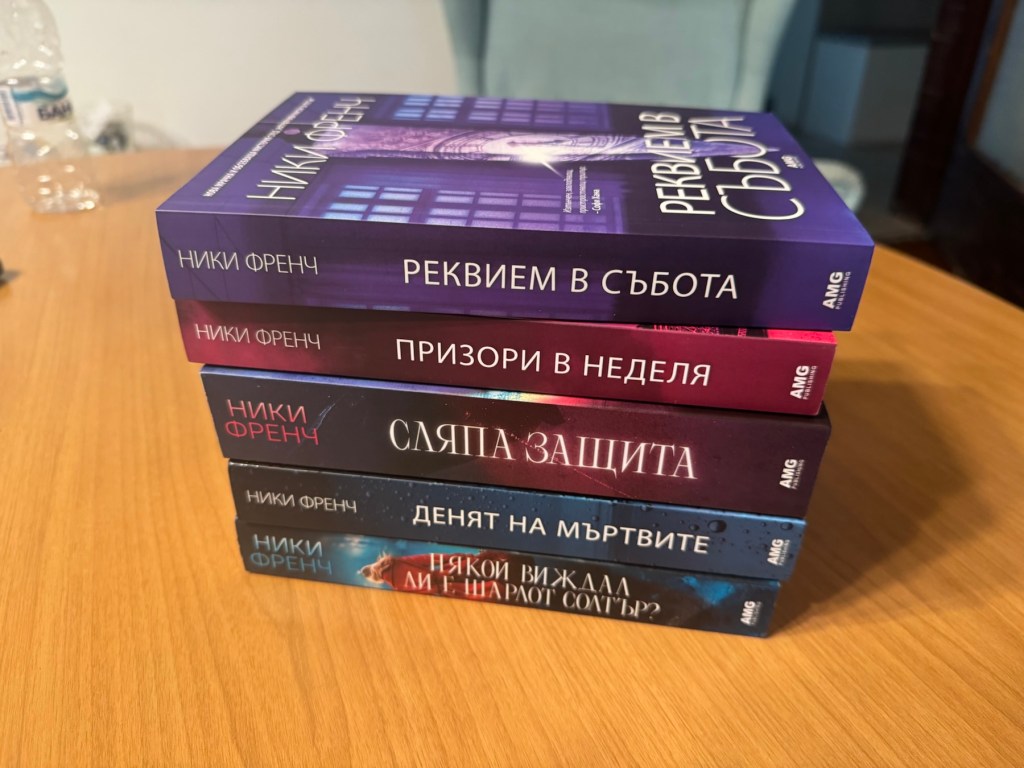
I’m reading the series about Frieda Klein by Nicci French.

It’s a series of 8 books, 7 named after days of week, and one final. Frieda is a psychologist with a medical degree who always has a murder case to solve. She has the persistence of Harry Bosch and uses intuition and advanced questioning to untangle the ball of lies in each book.

The only downside of the series is that it has main antagonists who remain untouched over the series, like some kind of comic book supervillains.

I already finished the first 6 books of the series, having 2 left, and a few more with other protagonists. I gave 5*/5 to 5 of the 6 books and 4*/5 to one, which is pretty high for a series like that.

Best Books I Read in June

My strategy for June was to read books from the piles of unread books I gathered over the last months. Six out of the eight books below were there, collecting dust.

This approach had mixed results.

Best

  1. Captain Blood – the only fiction book I truly enjoyed last month. Pirates, sea battles, honor, and love – I felt 15 again
  2. The Engineering Leader by Cate Huston – I wrote a post about it called Energy Management. It was a great learning experience about certain areas of leadership
  3. Shift by Hugh Howey – even though this book was not as good as the first part of Silo, it grows on you, and the ideas are very cool. Also, the main main character Juliette is badass. I rated it 4/5 but I think it gained a star over the weeks since I completed it and no longer feels like a 4.

Worst

  1. I read a gamebook about the Tsaritchina mystery – a very promising subject. However, I could not find the mystery. It’s large, takes a lot of space, and I kind of wish I didn’t buy it
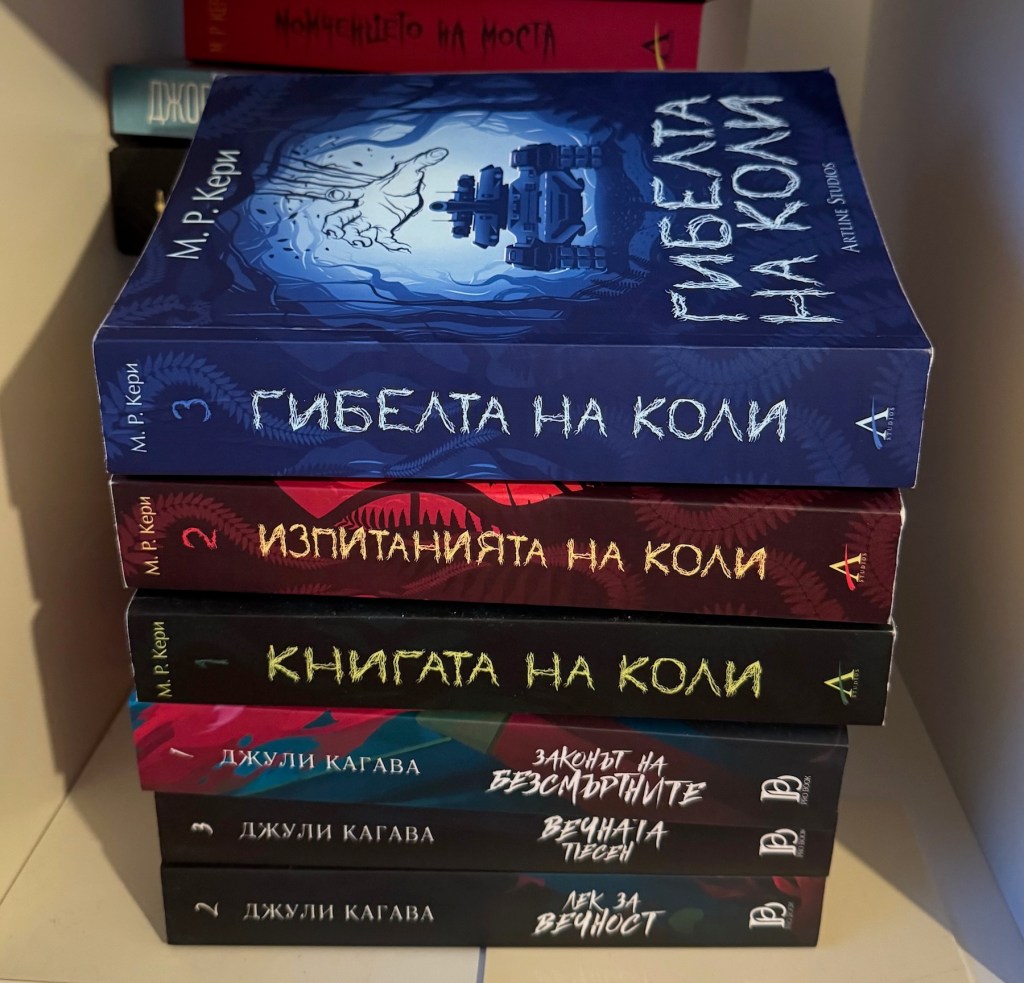
  2. The fall of Koli by M.R. Carey – I rated it 4/5 but the whole series is now waiting on the shelve to be donated, not sure how I managed to complete it. It lost a star since I finished it and it now feels like a 3.

The other 3 books were fine, solid 4s, and I’ll read the continuations.

Energy Management

I recently read The Engineering Leader by Cate Huston, a former senior lead at Automattic. The book covers many aspects of engineering leadership and highlights that being a lead means doing most of those things—like holding 1-on-1s, knowing what to discuss in them, hiring well, and onboarding people effectively so they integrate into the team instead of heading straight for the exit, but also providing feedback, managing performance and so on.

There’s one idea in the book that especially resonated with me, and I think it’s worth exploring further: the recognition that doing both lead work and programming work isn’t just about time management. It’s about energy management.

Take programming, for example. I might get a task like: rework this flow so it now handles five new behaviors. That kind of work flows roughly like this: I check the code, break the work into five tasks plus another five hidden requirements, estimate the total effort, and start closing the issues one by one. We end up completing 12 things, dropping a couple of the original five, and calling the project done. This is mostly a function of time spent, with just a few moments requiring deeper mental effort—typically at the beginning (when figuring out where to start or syncing with stakeholders) and the end (when shipping and hoping nothing breaks).

But then there’s another kind of work: writing a post-mortem for something I broke. Giving feedback to a direct report. Auditing a past project and writing up the results. Clarifying project requirements with external stakeholders. These tasks aren’t necessarily time-consuming, but they’re mentally expensive. They’re ambiguous, emotionally uncomfortable, and often easy to avoid. Stack three of them in a single day and you might get nothing else done—or feel like you can’t do anything at all. And if you don’t do them, the next day will be the same.

Cate Huston puts a name to this: mental energy. For me, just acknowledging that this is a major constraint in leadership work is the biggest takeaway from the book.

Looking back, I had already developed some coping strategies without realizing I was solving an energy problem:

  • I schedule draining tasks directly into my calendar. This includes not just work tasks, but things like dentist appointments—or even just scheduling the dentist.
  • I’ve learned which personal conversation topics tend to drain me, and I try not to explore those too deeply.
  • Quick but draining tasks get done first thing in the morning.
  • A task that’s so unpleasant it puts me “in the red” gets prioritized—because while I’m in that state, I can’t reasonably do much of anything else.
  • I break difficult tasks into smaller, more approachable chunks, and just tackle one at a time.

However, now that I know this is actually science, I can explore it further and see where can this get me.

Cate Huston raises plenty of other interesting topics in the book, and overall, I think it’s a worthwhile read.
Exit Strategy by Martha Wells

I feel a bit silly reading a book that just turned into a TV show.

In book 4 of the series, the Murderbot flies between space stations and faces several attempts to be stopped. However, it has no clear goal or understanding what’s going on, and it’s also not clear why the rich corporations are trying to stop it. We’ll have to wait more books to reach that clarity. Alien artifacts are involved, so it is promising.

This and the previous sci-fi book I read made me think about something else.

The Murderbot is flying through wormholes. Sten in The Wolf Worlds is also flying through wormholes. Assume a wormhole existed, and I flew from point A to point B through a wormhole. No object in space is stationary. Galaxies move towards gravitational attractors, star clusters orbit around the center of the galaxy, and planets orbit around stars. Flying to the other side of the galaxy through a wormhole means that my spaceship will suddenly be accelerated to incredible speeds, compared to the local objects, speeds from which the deceleration may take years. The spaceships in both books do not address that.

There is no plausible space flight, unlike what we see in true 5* sci-fis like Legion or Project Hail Mary. And if we remove the space flight, this book turns out to be a short cyberpunk novel, similar to Gibson’s world, where a heavily modified human surfs the Internet like if it’s a water slide.

For that, I think I’ll allow myself to score this book 4/5, still a great little adventure. The sci from the sci-fi doesn’t add up, otherwise very nice.

The Fall of Koli by M.R. Carey

I’m sometimes hesitant to complete book series. Some stories are better left open. We need to be thankful to M.R. Carey for closing this one even though objectively, a two-book series would’ve been even better.

The Trials of Koli left us with Koli finding a functioning ship in the ocean. In book three, he has to deal with what this ship represents, which is difficult to imagine. Whatever it is, it will be the key to solving the puzzle in some way, thankfully not as awful as in The Girl with All the Gifts.

I’d say the book is good, worth reading, and an honorable way to end the series. I’m ready for something else, where the world is thriving, and there are no ghosts.

4*/5