These books were part of my Alley of Books harvest.
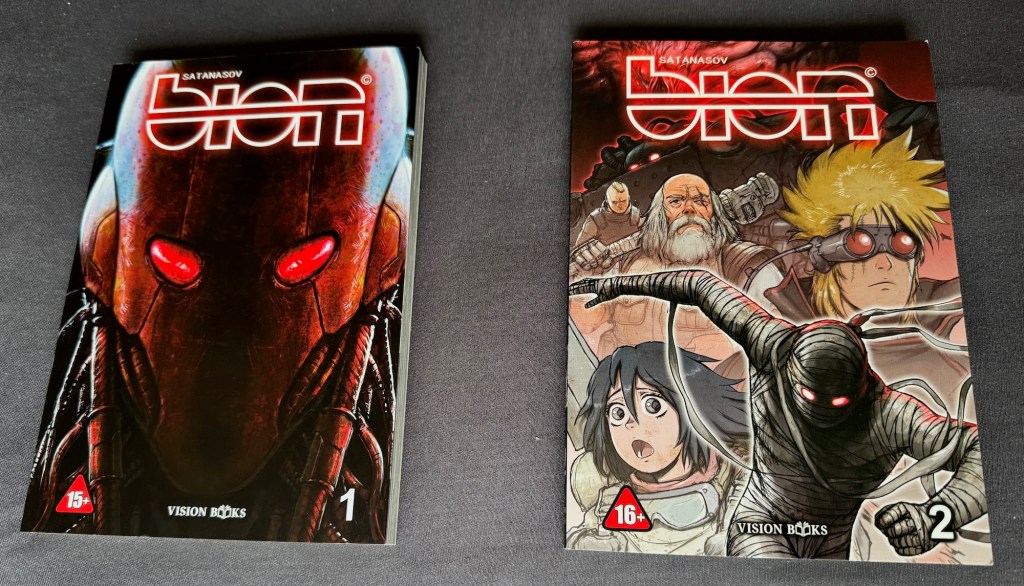
In a post apocalyptic world, one intact city remains habitable. Everything else is a radioactive desert. The survivors are highly dependent on a mythical high-tech building called “The Factory”. The further you go from it, the more destroyed the environment is. However, The Factory is clearly evil, and a resistance movement is forming.
A few very deep observations:
Part one is for 15+ audience, part two is for 16+. Part three can be expected to be for 17+ 🙂
Part one is a comic book. Part two introduces a robot girl with big eyes and some reviewers say it’s Manga
Late 90s or early 2000s, I was part of an IRC fan club of Terry Pratchett, called #ankh-morpork. I maintained a website built with html and iframes, dedicated to his works and the IRC channel. As part of this, I translated (poorly) a short story, a pretty grim one, and also pretty short, called Theatre of Cruelty. It showed poverty and death. The Discworld series shows cheerfulness, life, and dodging the bullet. It has trolls, dwarves, vampires and such, living together. But the Theater of Cruelty was just sad, grimdark, cruel. There was no hope in that story.
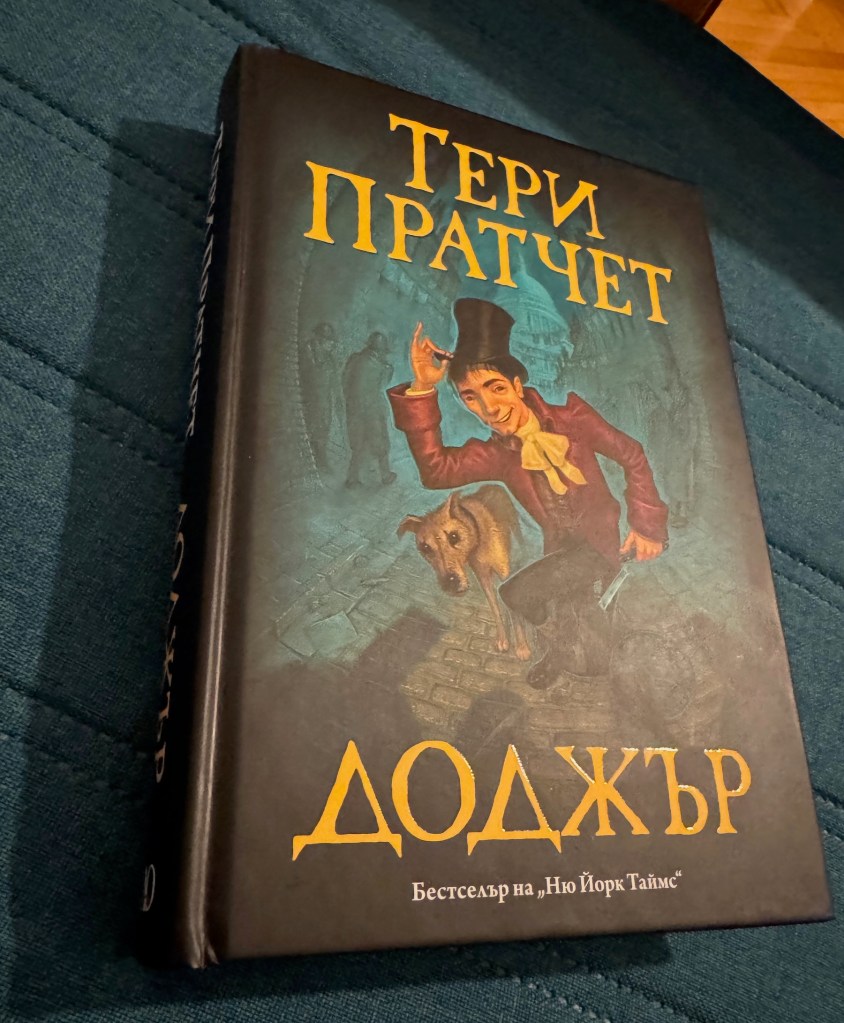
Dodger is a romance in the Theatre of Cruelty world. One that threatened to be a Romeo and Juliet story. We can speculate how much of Dodger was a result of Pratchett’s declining health but back in 1993, Terry and Lyn Pratchett were already producing that kind of works. Like sticky spots on a clean white table cover. The increased darkness of the Discworld series felt like a gradient, starting with the The Colour of Magic, with 100% cheerfulness and 0% darkness, and ending with the pure horror of his last works.
Dodger was published in 2012. It can be appreciated with no prior knowledge of Discworld. But the final fifth star requires some background. The language is shocking compared to his previous books. It has romance, which is also quite unusual. We had the grimdark world in 1993, long before 2007 when he was diagnosed with Alzheimer. And Tiffany kissed the Wintersmith in 2006.
Speaking of which, there are maybe 2 or 3 of the Discworld books I missed, and Wintersmith is one of them.
5/5, a great book. A blast from the past, and beautifully published with hard covers.
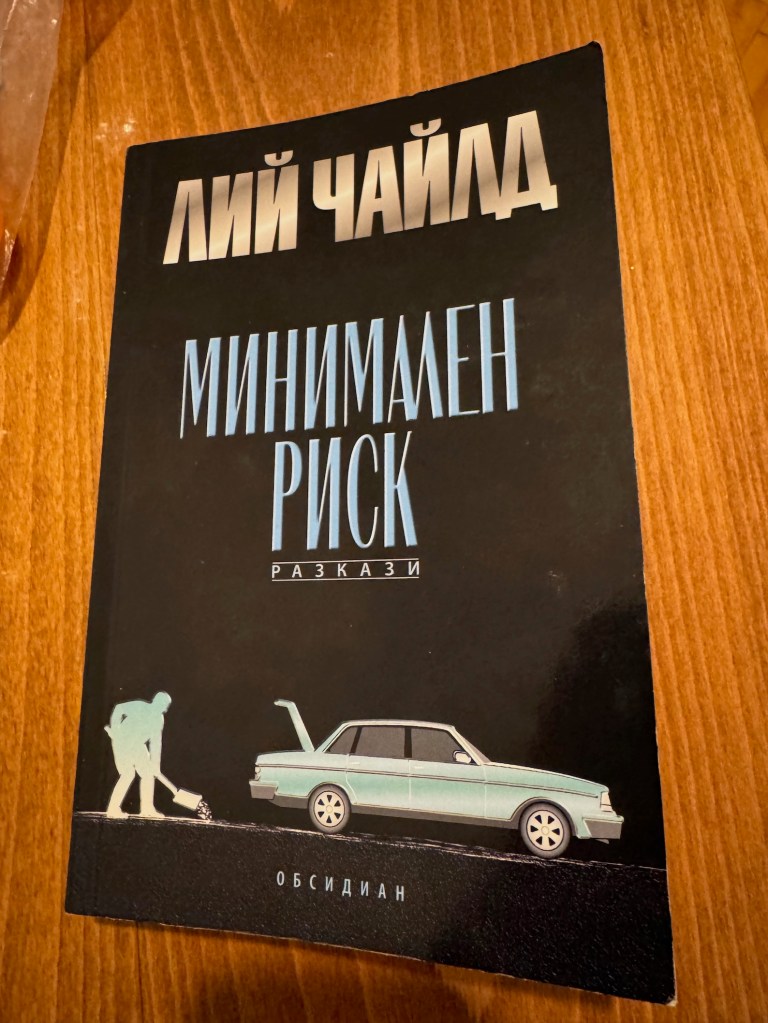
I’m not a big fan of books with short stories. Too much context switching. Context switching is hard. Makes you stop reading the book. Not all short stories are good. Some are bad. Bad stories make you want to throw away the book.
Safe Enough is no exception. But it’s Lee Childs. The good stories are good enough.
4.5/5
PS. Lee Child is known for his short sentences and simple vocabulary. Tried to replicate it in the post.
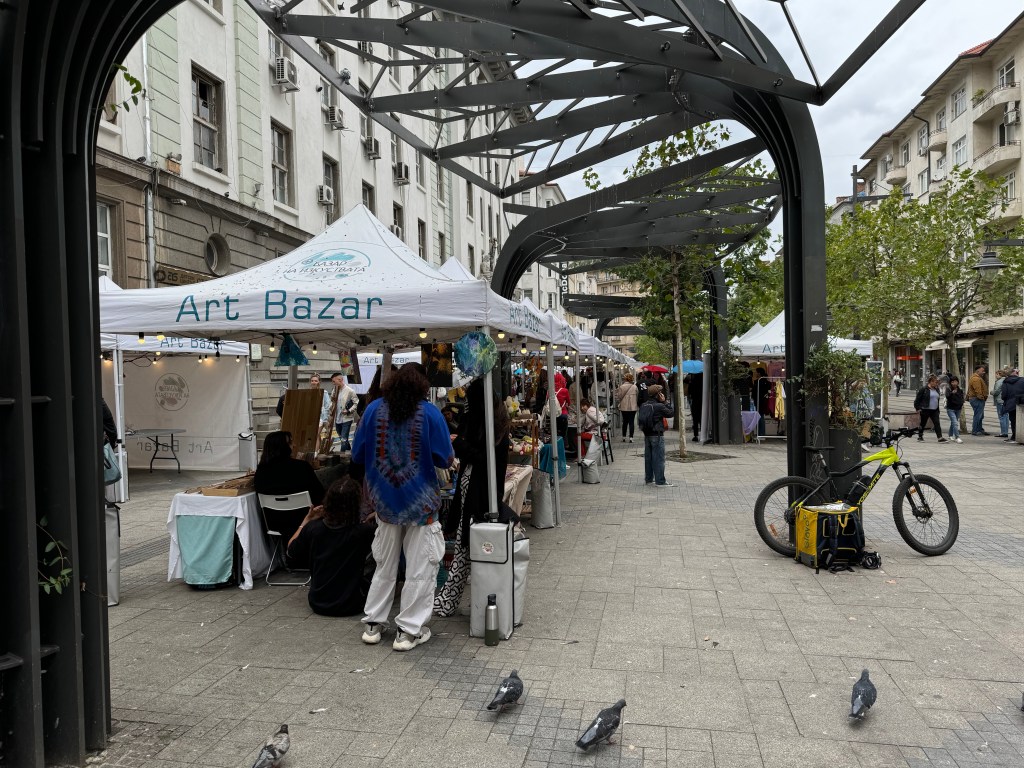
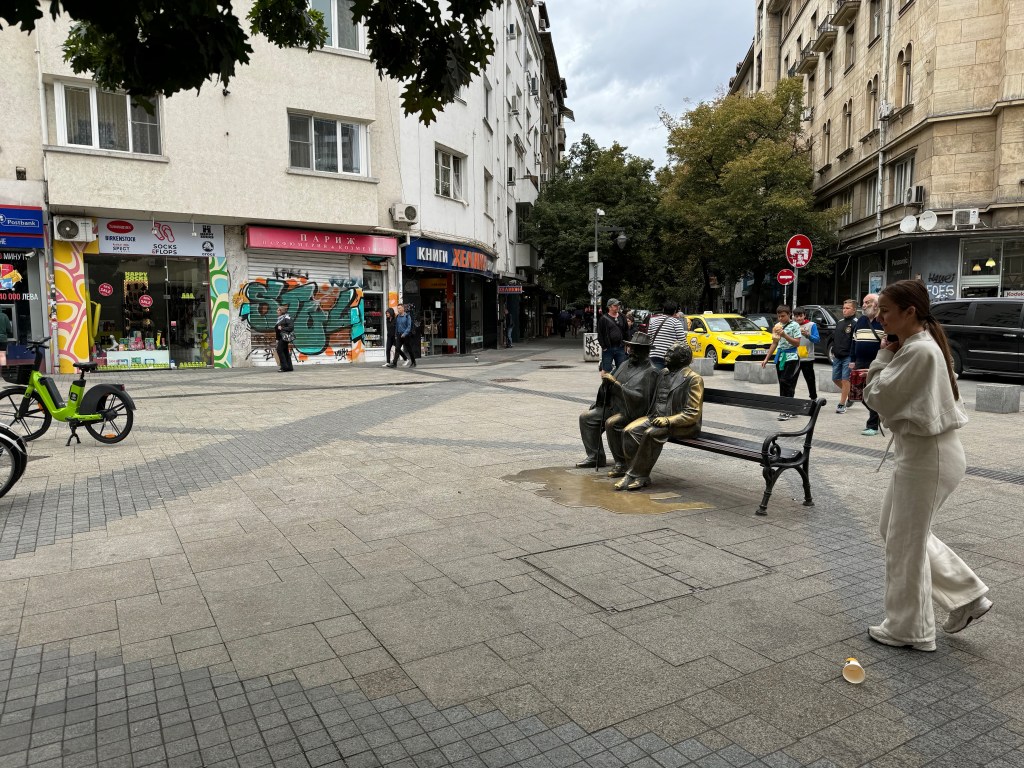
We went to Slaveykov this Sunday because of @knotty‘s comment about their visit to Sofia in the 90s. Back in the day, the square was a book market. My high school was 15 minutes walking from it so I visited it almost daily for many years. It had crowds of readers and piles of trash. The municipality reformed the area a few times, slowly pushing the booksellers out and to the surrounding buildings.
The building in the back of the first photo is the Sofia Library. The first floor is a ДКЦ – 2nd Diagnostic Center. Go there in case you have non-urgent health issues.
The fountain on the second photo has a sad story. Same spot had another fountain that electrocuted a person and was named “The Killer Fountain”. It was demolished and rebuilt after that.
The McDonalds in the back is the first one opened in Sofia in 1995. The queue was hundreds of people long. I liked it very much, it was a favorite spot in the center before Covid. It has a secret second floor where you can chill over your large Coke and nobody will bother you. One of the few McDonalds that operate somewhat normally, most of them are a shadow of their former glory.
The third photo is the Slaveykov monument. The father, the poet Petko Slaveykov, lived around that place, and the monument is with his son Pencho Slaveykov, also a poet. The heavy use of the bench for photos damaged the shadow, which is now replaced with a more durable but much uglier copy.
I’ve been a big fan of book fairs ever since I was a child. I hunted for comics and Karl May books, then gamebooks, then sci-fi, and so on. I usually visit them multiple times so that I don’t miss anything. Couldn’t do the multiple-visit tour this year due to my work trip where I damaged my computer and the consequences of that. At least I visited it once.
The Alley of Books’24 is happening right now on Vitosha Boulevard and near NDK.
Here’s my record-breaking harvest:
Bion by Satanasov is a comic book. Got the first part. I’ve heard good things about it
2 Gamebooks by Lubomir Nikolov, frequently featured here
Dodger by Terry Pratchett. Pratchett influenced me as a youth and is one of my favorite writers. I missed 3-4 of his books, and here we are – filling a void in my Pratchettist degree
Travis Baldree’s second book – a fantasy bookstore?
Brandon Sanderson’s The Sunlit Man from Cosmere
Orconomics vol 2. This time I’ll be prepared for a bloody fantasy rather than a satire.
There were more books I wanted to buy but sitting on the shelves is not perfect. I challenge myself to read 5 out of these 7 by the end of October. I’m the most excited about Bion and Dodger.



 Veselin.blog