Car Brain’s Dilemma

Car Brain‘s Dilemma is a (made-up) form of the Prisoner’s Dilemma.

  • In a city like Sofia, if everyone goes to work by public transport, bicycles, or walking, the average commute would be 30 minutes
  • If most people go by bus, the ones who choose a car would reach work in 15 minutes
  • if most people go by car, going by bus will take 1h, and going by car will take 45 minutes

It’s faster to go by car but if all people don’t use cars, the average commute time would improve. How do you resolve that?

I wrote a small essay on the subject of why people associate cars with freedom in 2023

13K Steps

The natural trend of everything in life is a decline. Health, relationships, skills, happiness – it all needs effort. You’re either working to improve it or it goes sideways, south, or just vanishes.

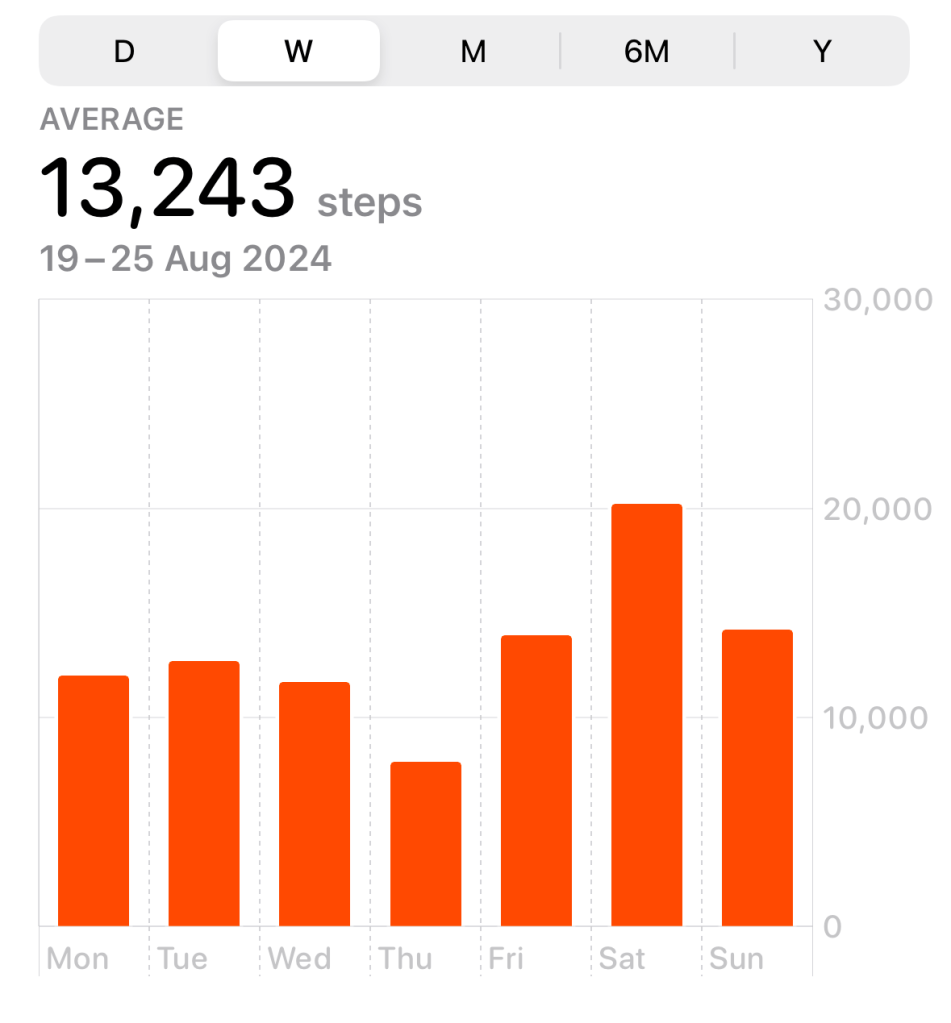
I’ve been trying to improve my health by walking 10K steps daily. Last week I achieved 13K, using the colder weather and the willingness of my wife and the little kid to participate. At the end of Sunday, after meeting the goal of 13K for the week, I just tossed the Apple Watch and turned off my brain. Didn’t even read a book. Felt overwhelming and unpleasant.

Why does it feel like it is too much? An average of 13K means about 2h 10 min/day. The day is 24h. This leaves 21h 50min of inactivity. The human body was not made to be physically inactive for 22 hours per day. I have no answer yet. I’ll keep walking meanwhile.

Umberto Eco’s Criticism of Dale Carnegie

I never imagined I’d ever read criticism of Dale Carnegie’s ideas in “How to Win Friends and Influence People”. However, this happened last month while reading a collection of essays by Umberto Eco. The collection is called “How to Travel with a Salmon and Other Essays”, and the essay in question likely translates to “How to Be Famous”.

Eco mocks Carnegie and summarizes his famous book down to the idea that if you want to be successful, trick strangers into feeling famous. He uses the example of TV shows that invite regular folks as guests—so many shows, and so successful, that eventually, every person ends up on TV. However, I’m thinking of YouTube, TikTok, Instagram, Twitch, and so on. The success of these apps depends on how famous they make the average user. Give a 10-year-old 1000 likes, and they’ll stay on the platform for years, building a mental image of themselves as the next MrBeast.

Eco brings up the problem that Carnegie’s advice encourages non-genuine behavior. However, having watched The Flintstones, I suspect that genuine human behavior involves frequent fights with clubs, living in caves, and an average life expectancy comparable to squirrels. I’d rather stick to what Carnegie says.

Eco is at least partially right about one thing – most people on the Internet love likes, myself included 🙂

Sprezzatura

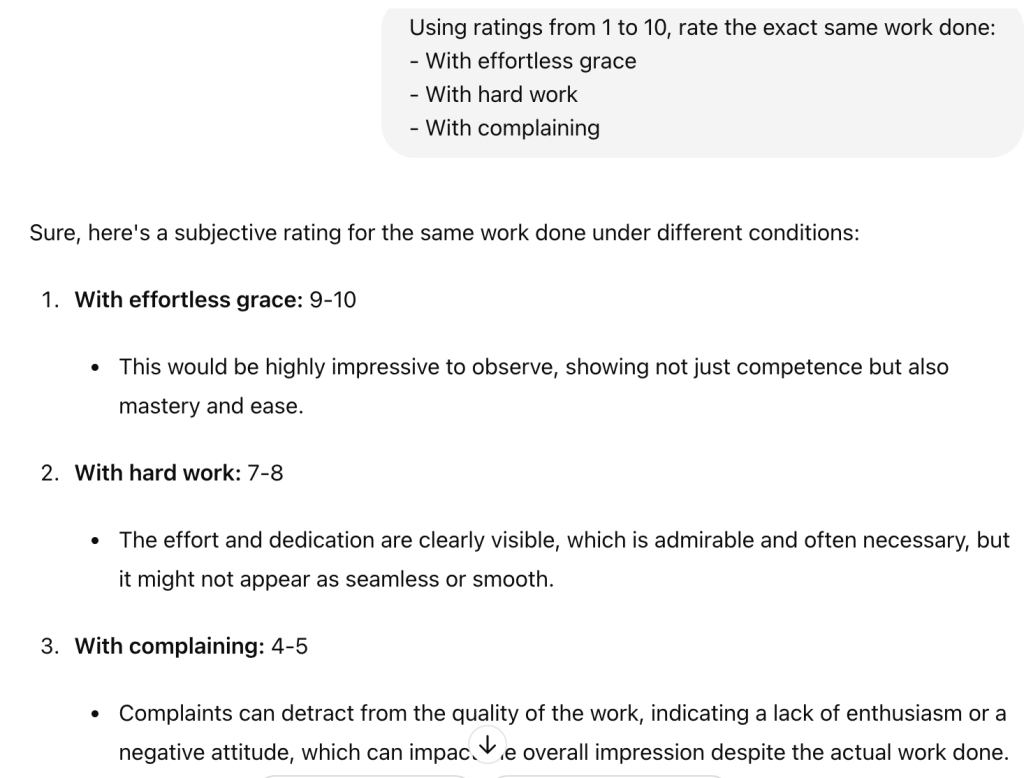
From Wikipedia: “…the art of making something difficult look easy”. Curiously, the same work done with effortless grace and visible hard effort is perceived differently. Add a pinch of complaining and the good job can turn into a nightmare without any other change in the visible outcome.

ChatGPT agrees and says Sprezzatura is rated 9-10/10, while the work done with complaining is rated 4-5.

I encountered that word in Wolf Hall where the author refers to 1528’s The Book of the Courtier. Wolf Hall is a gem and I hope to dedicate a separate post to it once I finish it.

Are there things you try to practice daily to live a more sustainable lifestyle?

Daily writing prompt
Are there things you try to practice daily to live a more sustainable lifestyle?

Here’s a rough list of things I would tag with “sustainability”

  • I try to walk 10k/day on average. It improves my mental health for a whole lot of reasons. I barely use the car so it reduces my family’s carbon footprint
  • Eat less meat. I’ve tried vegetarian but it doesn’t work for me. Less meat is still better than other options
  • I read from about 10pm to when I get sleepy. Once I get sleepy, I go to bed. In case I can’t sleep, I read more
  • I have an 8pm limit on work, even if I want to do overtime, I try not to exceed 8pm. Remote work comes with risks, one risk is blurring the line between personal and professional, and putting a strain on family
  • We adopted a liberal minimalism at home. I wouldn’t buy clothes if I don’t need them, or if I don’t have empty space in my 2 drawers. I still buy paper books though, shame on me.