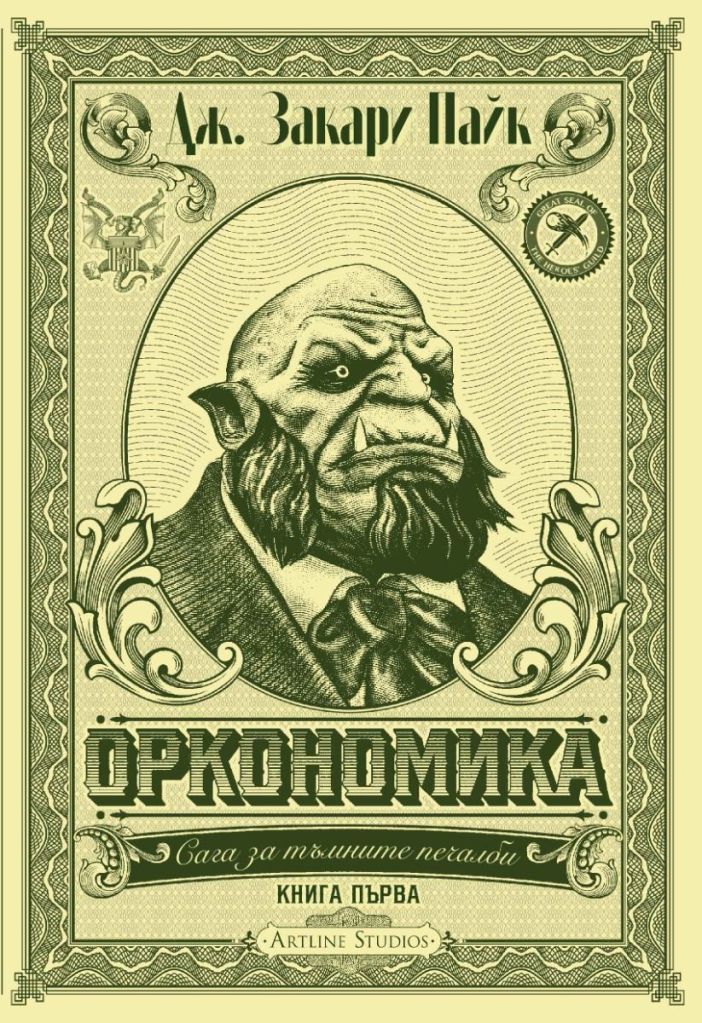
I bought this book because I wanted to read something like Terry Pratchett or Douglas Adams. The book wasn’t that. It’s a very serious epic fantasy, closer to George R.R. Martin than Pratchett.
Gorm Ingerson is a dwarf and a fallen hero, who abandoned his mission years ago. Once an unstoppable slayer of monsters, he now lives under the radar of the major treasure-hunting enterprises. He must join forces with others like him to chase stolen, powerful artifacts and return them to an owner of their choosing.
While the mission is so-so, the world is wow. It’s a boiling can of worms that can’t possibly exist. J. Zachary Pike describes at least 20 smart humanoid species with some dominant over the others, like a fantasy version of Star Wars. The issue is that most of these races would naturally become endangered unless they have some form of habitat isolation, which they don’t. Here’s scientific proof:
- The Witcher series has a similar setup with all the possible folklore and Tolkienist fantasy races. Humans meticulously exterminate the “monsters”, making the Witchers less and less needed
- LOTR has habitat isolation with different races living in separate areas and not mixing much, apart from occasional wars to make the story worth telling
- Discworld has a situation in which the races are not fighting with each other, somehow evolved together
- Song of Fire and Ice has isolation but also has Dragons that are endangered species
- Raymond Feist’s Midkemia world has the evil Valheru, which were wiped out from the universe before the books even began
In Orconomics the mess of intelligent fantasy species was created by magic and the Discworld-like mixture suffers from the Witcher-like problems. Most races are endangered and suffer from a Moriori-style future. The book doesn’t offer a plausible explanation for why or how these species still exist.
A well-written and engaging book with many charming characters, though it’s grimdark and lacks humor. The world is both the best and the worst part of it.
4*/5



 Veselin.blog