
While waiting for Dennis E. Taylor’s Legion part 2 to be translated in Bulgarian, here’s a legion of yard cats.
Cats, good books, AI, and religious walking in the city of Sofia
While waiting for Dennis E. Taylor’s Legion part 2 to be translated in Bulgarian, here’s a legion of yard cats.
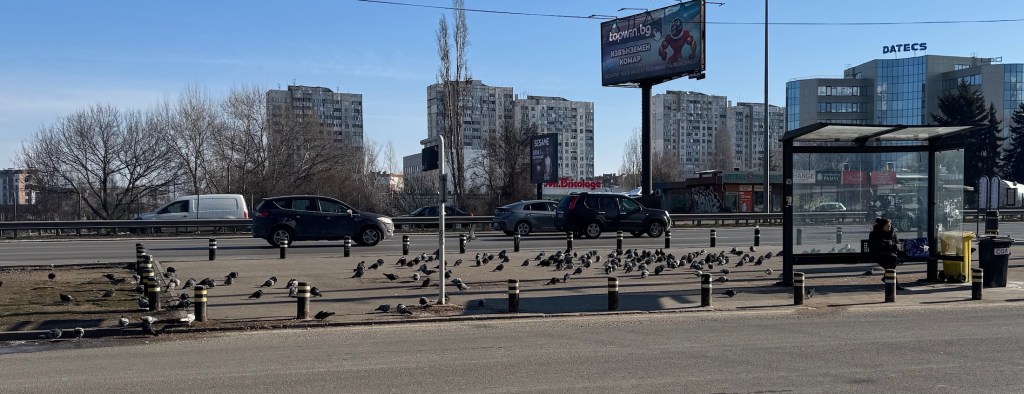
This pigeon gathering puzzled me. I didn’t see food or anything nearby, only cars. Why did they go and stay there, most of them not visibly moving? The big bucket to the right says salt.

All things in life have a natural tendency to decay over time.
The building in the photo was once a military headquarters but is now managed by various branches of the government. Different management led to different fate.
The short answer? TL;DR.
I’ve noticed a pattern with people who start reading. They would pick a book that they really want to read and get stuck with it. A book that makes a statement. For example, I started reading The Engineering Leader by Cate Huston about 6 months ago, and I’ve not reached 30% yet. Not giving up on that one. I know the author, she gave me a copy with an autograph. I will complete that book. But then, I could’ve had a 6-month reader’s block with it, turning me from a person who reads to a person who doesn’t. The same can happen with fiction. I started Brandon Sanderson’s Rhythm of War twice. He’s great, I met him in person, his books are fantastic. But then, why did I get stuck between page 200 and 300 both times?
I think that it’s not about the book itself. The right person at the right moment would not get stuck. But we do get stuck, particularly when we want to have read something rather than enjoy the act of reading it.
There are still challenges I haven’t figured out. For example, how do I consistently find books I’ll actually enjoy? No clue. I have a pile of unread books at home. Most of them don’t seem as appealing as they did when I bought them.
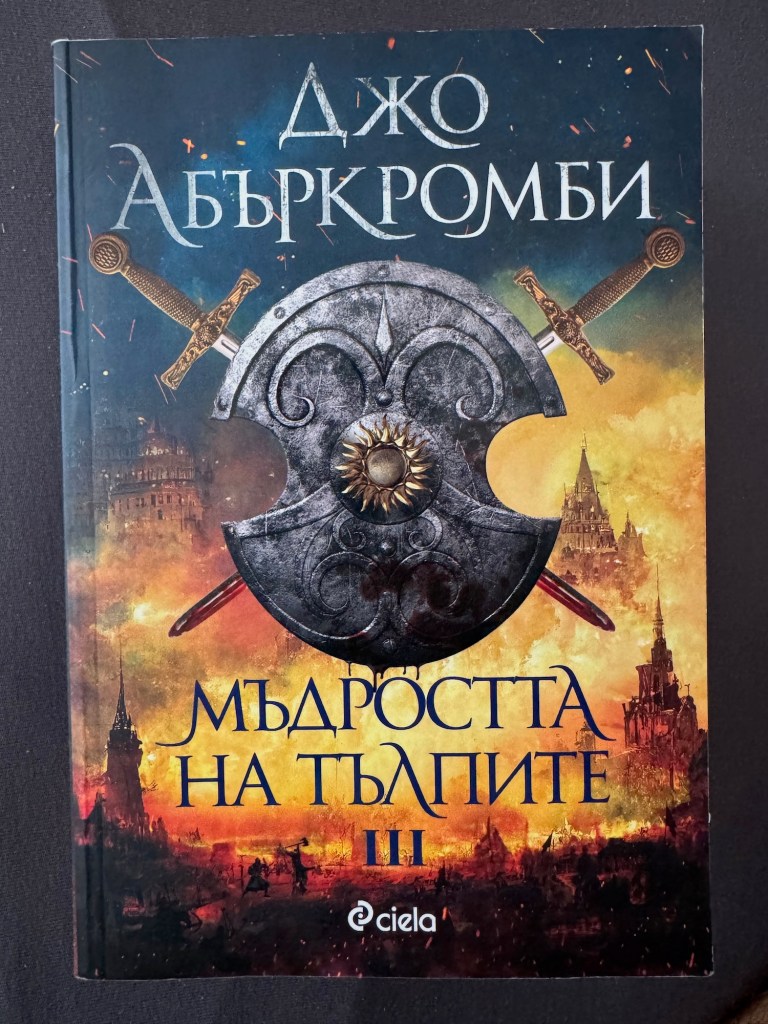
The book is long. It’s as long as least three different books intertwined with each other. It ends with a full novella after it seems to be already over. The characters drop memorable wisdom, full of logic, all the time. I don’t remember them exactly, but you get the idea—those kinds of insights. About the right moment, survival, and common sense in everything.
The revolution is vividly described, resembling the Bolshevik Revolution, the purges after World War II, and the Great Bourgeois Revolution from a more distant past. There is a lot of bloodshed, and it’s tragic. Somehow, the inquisitors from the previous regime are at the heart of it because the big change can’t go that deep.
I recently published a post which featured Savine dan Glokta as one of the most badass female fictional characters. She’s the only likable person in The Wisdom of Crowds. She would try to make the right things, although not too hard. After all, according to almost everyone in the book, survival is more important than fairness. Those who believe otherwise tend to leave the series quickly.
I’d say Joe Abercrombie managed to surprise me with his long-term planning because the seeds of this story were planted thousands of pages earlier. The format breaks away from the pattern of the previous ten or so books. In my opinion, this final installment—at least for now—is the best. Leaves a lasting memory and makes you think.
5*/5
 Veselin.blog