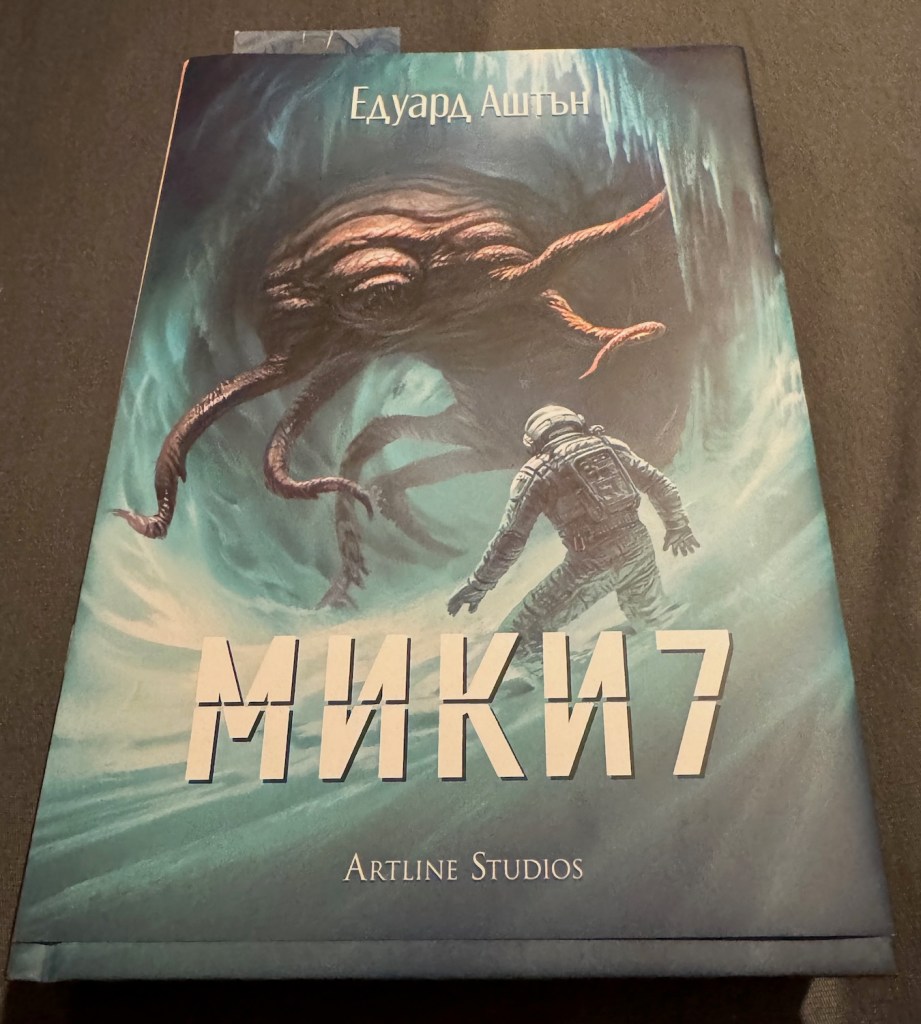
Mickey7 by Edward Ashton, Book Review

Mickey is a colonist on the wrong planet. It’s cold and icy, and also inhabited by the metal-eating creepers. His only advantage is that he can be respawned, if the colony considers his respawn worthy the loss of calories. The cold and icy planet doesn’t provide much food sources, so everyone is hungry. Respawning might not be a priority.

Quite a terrible situation for the 7th iteration of Mickey but it gets worse when he survives to only discover that Mickey8 has already been spawned, without him being dead. Having two copies of the same person is considered a mortal sin, punishable by death. The twin Mickies will have to figure it out.

This is supposed to be a distant future space opera, but it felt like a post-apocalyptic thriller in the world of Silo. Either way, it is a fantastic sci-fi. A creative person in a terrible situation. 5/5.
This is also the 12th book from the Nebula series I finish. I might be able to read the whole series, if I only have the bravery to start Children of Ruin.
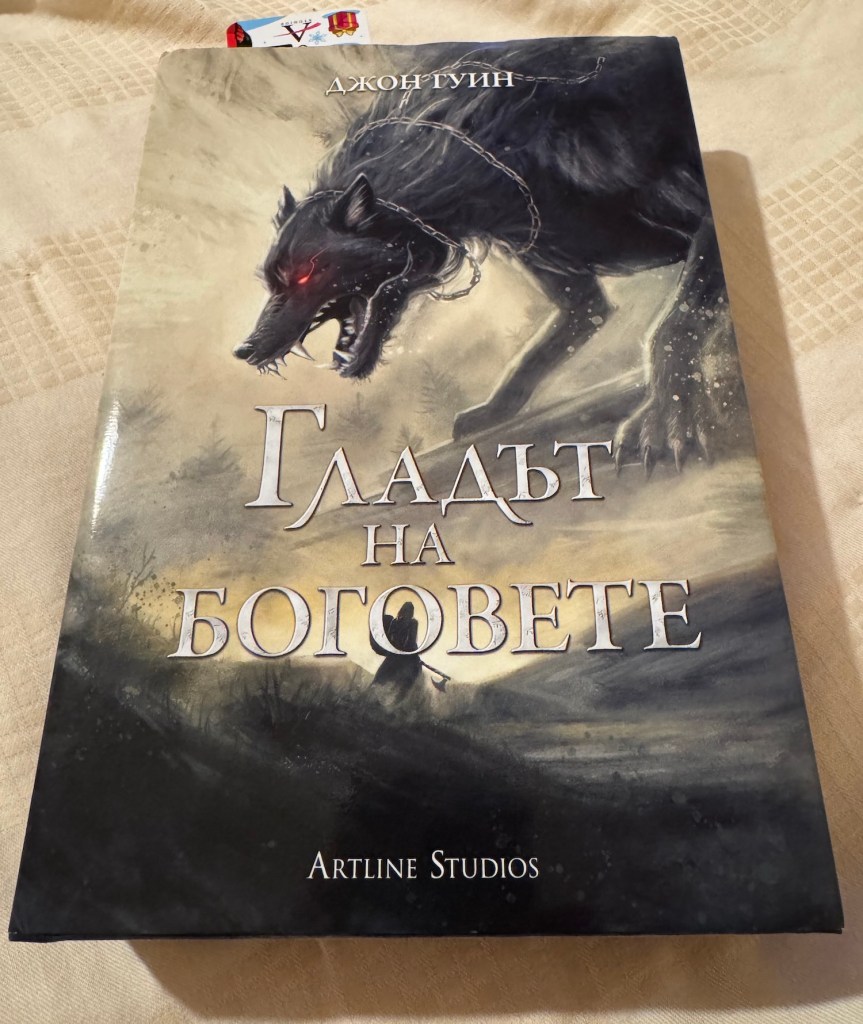
The Hunger of the Gods by John Gwynne

A wise person once said that in trilogies, the first book is good, because it builds the world. The last book is good, because it resolves the story. The middle book is just a filler, because these books come in threes.

The Hunger of the Gods is a second book in a trilogy. It comes with many traits typical of such books. There is no world building, apart from the description of some larger cities. Few of the story lines conclude. There’s a bit of a character development but it is only in the villains.

The world John Gwynne built is like an Orconomics spin-off with vikings. Lots of creatures, created by the dead gods and living around. Lots of fighting with swords and spears. Rage and berserk-style battles where the Hulks never die. The mains wolf-out at the right moment to save the day. A reader in a mood for super-heroic stories may appreciate all of that. I see that I gave John Gwynne’s first book 5/5, and even have another on my shelves at home.

Pros:

  • The world is intriguing, despite not developing much since book 1
  • Given that power comes from the blood, the physical strength doesn’t mean much. Men and women are equal, with the most fearsome warriors being women
  • Orka Skullsplitter and Elvar Firebrand have some nice POV chapters.
  • The dead gods are wiser than expected

Cons:

  • The whole story relies on almighty slave collars. They are used to bind even gods and sorcerers, allowing people with no special gifts to dominate beings of incredible power. This isn’t great and reminds me of the worst parts of the Wheel of Time.
  • Reckless behavior is rewarded with Breca and Varg No-sense making very little sense.
  • It’s too long.

Overall, I think it’s readable but I’m discouraged to get the continuation.

3.5*/5

The publisher featured the dead god Ulfrir on the cover. In the book, it is described as wolf-sized but can expand at will.

The Nebula Collection by Artline

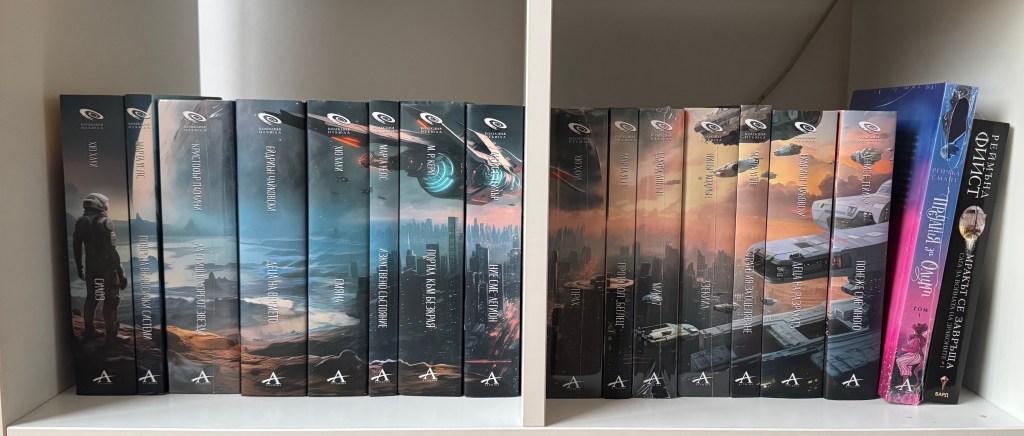
Publishing books with covers that are all part of the same image is still a relatively uncommon practice in Bulgaria. There have been some nicely designed series over the years, but not many that build a consistent visual identity across multiple titles.

This is the Nebula sci-fi series, featuring titles like Murderbot, Silo, and others. I’m curious to see how long this publisher plans to keep the style going. Something with the perspective feels limiting, as if it should end within 2-3 books.

And here is my success with the books, green are those I already read, red are those I did not start or did not finish. Overall, very solid books so far, mostly 5/5 with a rare 4/5 here and there.