Star Wars: Thrawn by Timothy Zahn

Thrawn is a highly creative blue humanoid smurf-like creature from the Star Wars universe.

You can’t take this book too seriously, knowing it’s part of the Star Wars universe. However, Zahn gave his best here and the story significantly exceeded my expectations. It is a fine quality space opera, with a charismatic main character, whose superpower is his military skill. He’s a mix of Ender and the Stainless Steel Rat.

The supporting characters aren’t two dimensional and I suspect we’ll see some of them again in the sequels. Vanto, in particular, could have his own book. There is no mention of the force anywhere, no midichlorians, no magic at all. The storm troopers are able to hit their targets. This is an improvement over the usual trope in the Star Wars universe I’ve seen so far, where the final battle is decided by use of the force, rather than skill.

The print quality is superb and despite that it’s possibly targeting teenage readers, I enjoyed it. 5*/5 and will order the continuation soon.

Lost in Math: How Beauty Leads Physics Astray, Book Review

It’s been awhile since I completed a popular science book. This one was good. It was about the process of exploring new physics but you can replace the physics with software engineering and it remains relevant, or at least it remains relevant for me. I enjoyed it and I feel full of ideas.

My main takeaway from Sabine Hossenfelder’s work is that our perception of beauty is frequently holding progress back. All progress in Physics was achieved by sacrificing the old understanding of what’s beautiful in favor of something that’s temporarily perceived as ugly, illogical, but better explains the world. It seems to me that this statement could be extended outside of science to Software as well, where progress is also usually done in random leaps, when new (or even old and failed) ideas suddenly break through.

What’s beautiful? My take from the book is that beautiful is something that’s symmetric, simple, understandable, familiar, and makes sense to our simple brains. Intuitive.

Let’s say we have the following series:

1, 2, 4, 8, 16

What’s the next number? Trivial answer would be that the series represents the powers of two, so next one is 32. A 6th grader will quickly point out to 32 as the obvious answer. However, 31 is also a less obvious next, because it appears in Moser’s circle problem. If we look at the number of divisors of n!, the next number is going to be 30. These options appear less and less natural but they’re not far off our intuitive expected answer, and we would not hesitate to accept them with the right context.

What if the next number is -1,031*10-17? We have a strictly positive series with natural numbers (positive integers), and we suddenly get a negative, and very tiny fraction, and no obvious explanation why? This can’t be right, right?

1, 2, 4, 8, 16, -1,031/10^17, ...

If that’s what we get from our data, our internal alarm rings a bell, and we would be looking for an error. And if we look for an error or a reason to give up, Hossenfelder says, we are going to find it. There’s a bias that comes from our expectation of what’s natural, because we won’t use the same rigor in verifying the results if the next number was 31 or 32. Of course, this isn’t the only bias that prevents us from seeing what’s right in front of our eyes. She summarizes multiple others, and even provides an appendix with advice on avoiding that in our line of work.

Data contradicting with our expectations is not a bad thing. There can be truth in the unexpected or disappointing data, if we know how to look at it. There can be lies in data particularly if we don’t know how to look at it. My next math-adjacent book, sitting right next to me, is called Everything is Predictable (such a clickbait-y title). I’m already deep into it and it’s quite complimentary to Sabine’s work.

Overall, Lost in Math is a great popular science journey. I also enjoy watching Sabine’s critical YouTube videos and recommend them too.

5*/5

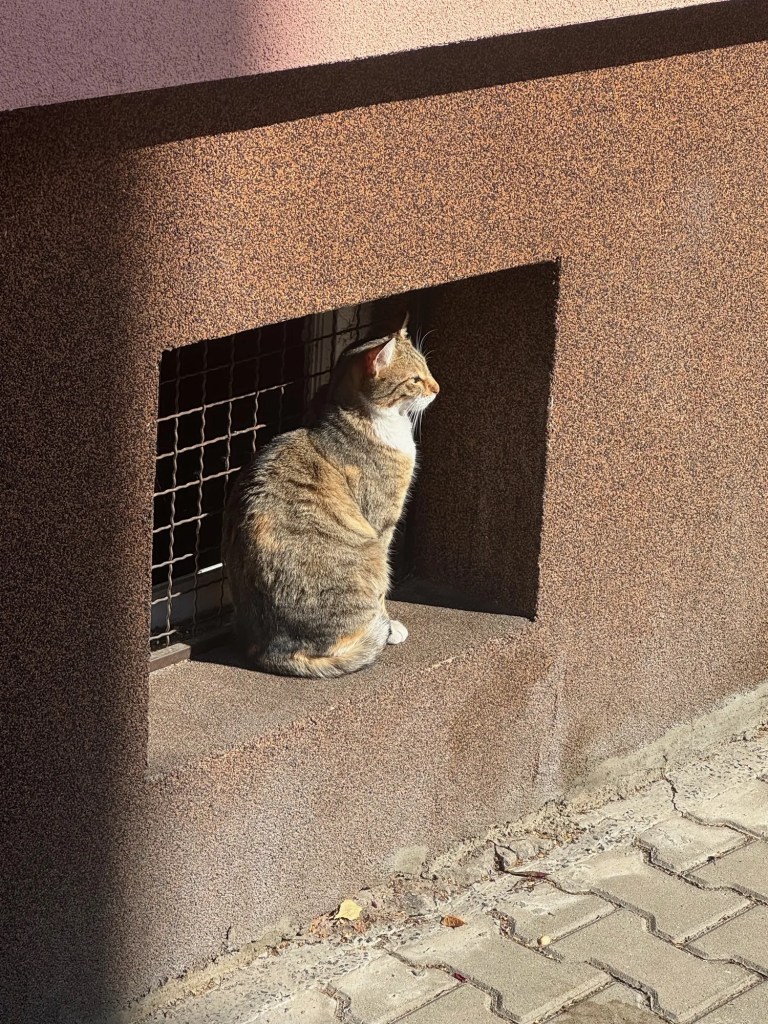
Sleeping beauty

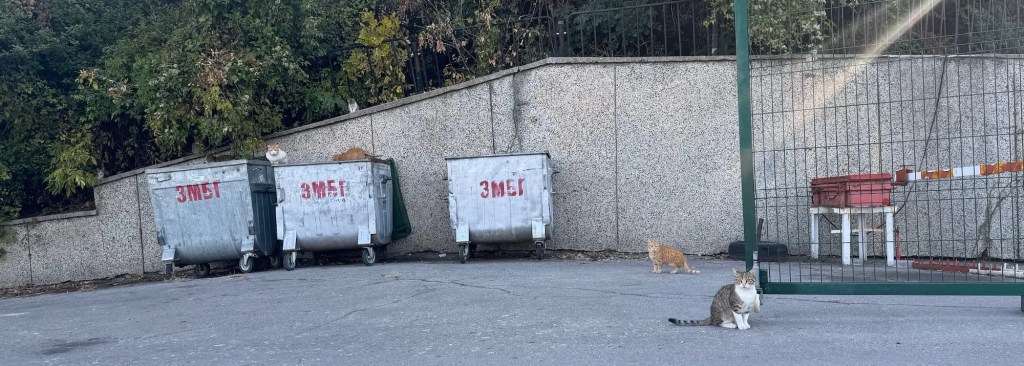
This gentleman remained unbothered by my approach to photograph him.

Vicious predator in his natural habitat. He’s probably watching me on the second photo.

Cherni Vrah

One of my New Year’s resolutions was that I would hike to Cherni Vrah three times this year. Making steps in the city is easy – it doesn’t take much time, it’s flat, there’s food and water everywhere. Hiking is hard, it takes at least 45 minutes to reach the starting point. Then you drink what you carry. And last but not least, my hidden goal was to make the entire family go to the mountains.

Took us forever but we managed to do it with the kids today, so it couldn’t be better. They didn’t complain too much, which was also nice.

If one thing didn’t go well is that I need to wash my new white sneakers because I stepped into the mud several times. These are my only comfortable shoes at the moment and I made a sacrifice for the successful hike. Maybe this will motivate me to look for a backup pair next week.