I only see a point in preparing for small, family-level emergencies. The big stuff I’d leave to the government. We stocked up some toilet paper and Fusilli during the early days of COVID-19. That didn’t work well.
My lifestyle includes playing football and doing weekly hikes. This means injuries, bites, and weather risk.
Bites and stings by insects can be quite risky when they get infected, and I feel like anything that’s not a mosquito bite gets infected. We keep a good supply of cremes, patches, and bandages for people of all sizes – from Paw Patrol-themed to large and cheap for fallen fathers.
I now have a backpack that has a reusable water bottle, a windbreaker jacket, and a scarf that can cover the entire face. This makes me prepared for things going slightly south with the weather during hikes.
Why scarf? The idea is that a sudden change in weather can come with strong winds, making it impossible to walk if the face is not fully covered. People lose most of their heat from the head. Keep the face warm and comfortable, and the sudden snow might not be as bad.
TL;DR – my emergency preparedness plan includes large amounts of treatments for wounds, a scarf, and a credit card.
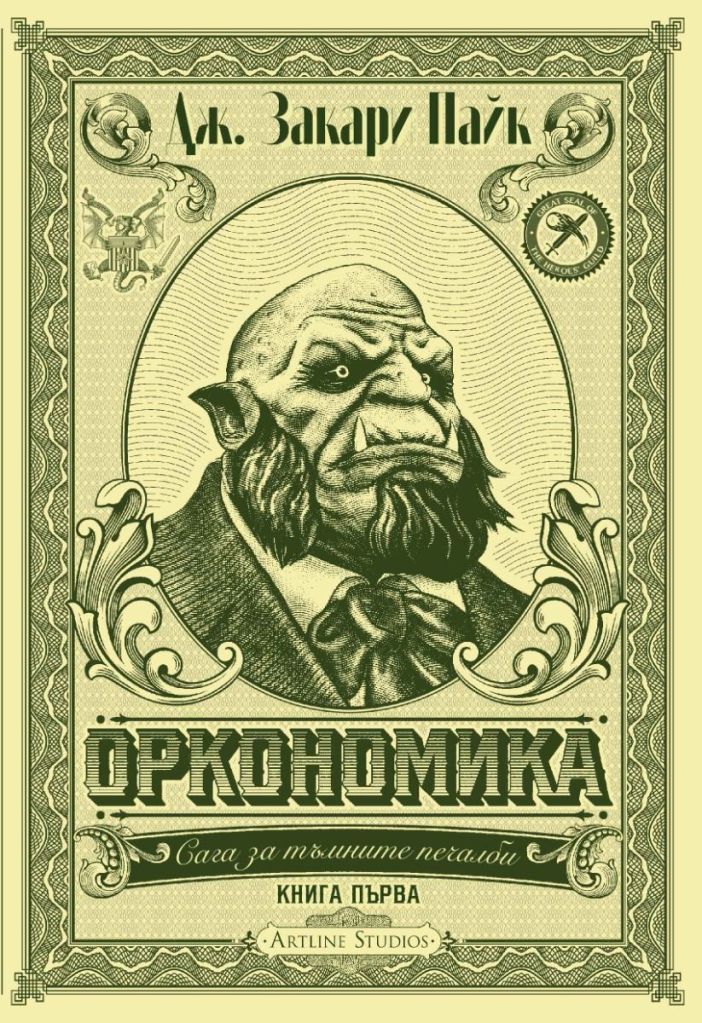
I bought this book because I wanted to read something like Terry Pratchett or Douglas Adams. The book wasn’t that. It’s a very serious epic fantasy, closer to George R.R. Martin than Pratchett.
Gorm Ingerson is a dwarf and a fallen hero, who abandoned his mission years ago. Once an unstoppable slayer of monsters, he now lives under the radar of the major treasure-hunting enterprises. He must join forces with others like him to chase stolen, powerful artifacts and return them to an owner of their choosing.
While the mission is so-so, the world is wow. It’s a boiling can of worms that can’t possibly exist. J. Zachary Pike describes at least 20 smart humanoid species with some dominant over the others, like a fantasy version of Star Wars. The issue is that most of these races would naturally become endangered unless they have some form of habitat isolation, which they don’t. Here’s scientific proof:
The Witcher series has a similar setup with all the possible folklore and Tolkienist fantasy races. Humans meticulously exterminate the “monsters”, making the Witchers less and less needed
LOTR has habitat isolation with different races living in separate areas and not mixing much, apart from occasional wars to make the story worth telling
Discworld has a situation in which the races are not fighting with each other, somehow evolved together
Song of Fire and Ice has isolation but also has Dragons that are endangered species
Raymond Feist’s Midkemia world has the evil Valheru, which were wiped out from the universe before the books even began
In Orconomics the mess of intelligent fantasy species was created by magic and the Discworld-like mixture suffers from the Witcher-like problems. Most races are endangered and suffer from a Moriori-style future. The book doesn’t offer a plausible explanation for why or how these species still exist.
A well-written and engaging book with many charming characters, though it’s grimdark and lacks humor. The world is both the best and the worst part of it.
The Free Electron blog post was written by Michael Lopp 19 years ago and later published with additions to the book Managing Humans. It tells the story of extremely productive engineers and how to use that force of nature from a team lead point of view. I look back to it whenever I encounter genius work perhaps with a bit of an unexpected direction. Give that story a chance.



 Veselin.blog