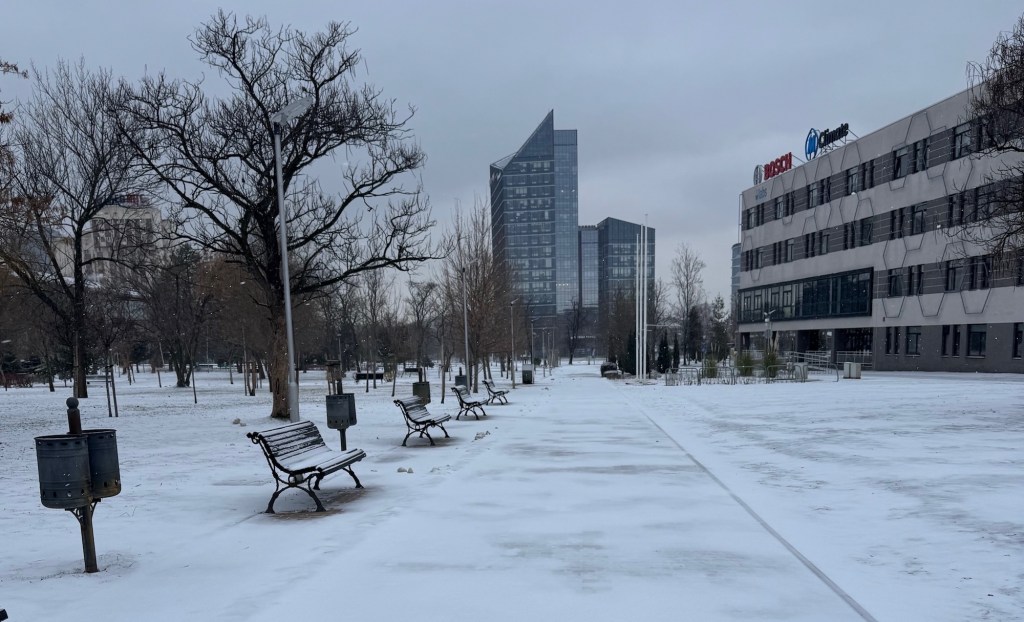
Climate change has brought softer winters to Sofia. It is the first time we’ve had two days with snow this season, and the snow barely hides the grass. It was, however, very windy, so the few snowflakes and the modest -2°C felt quite unpleasant. We could call it a snowstorm, in the absence of a real one.
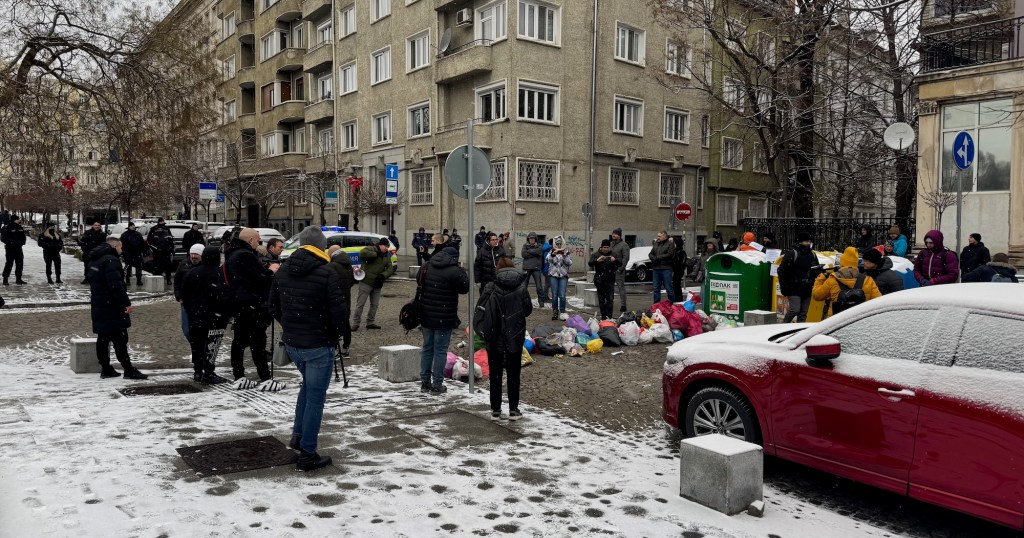
I also managed to see a protest against our mayor. Equal parts protesters, journalists, and police stared at a tiny pile of trash. I walked by piles larger than this on my way to the center.
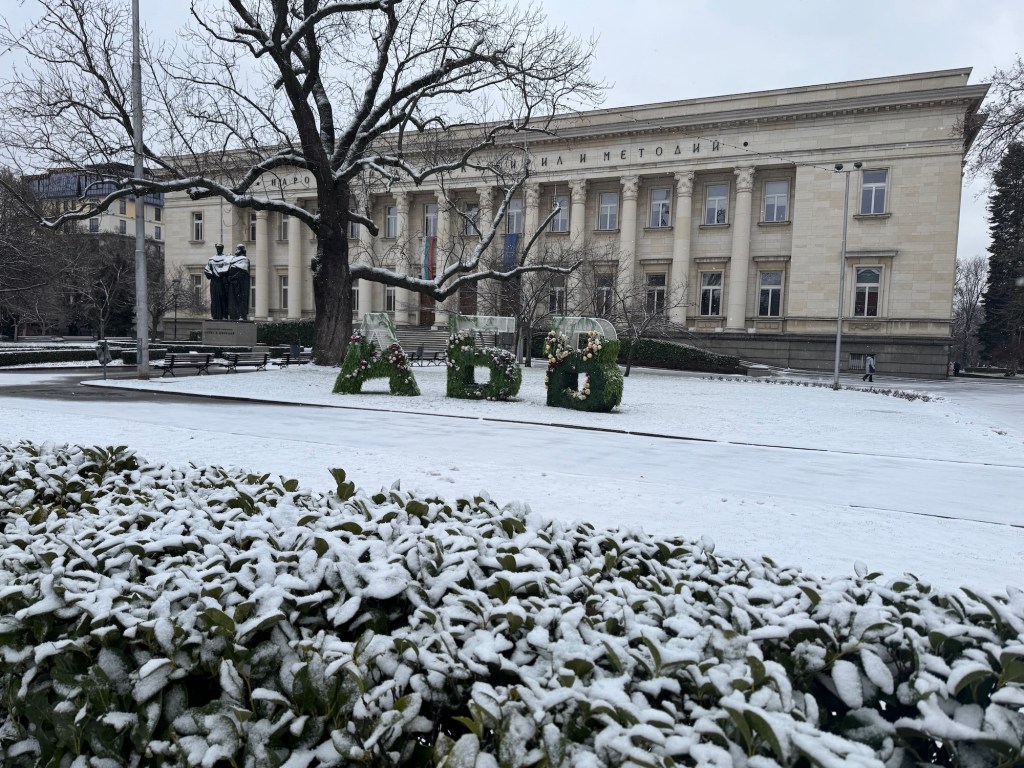
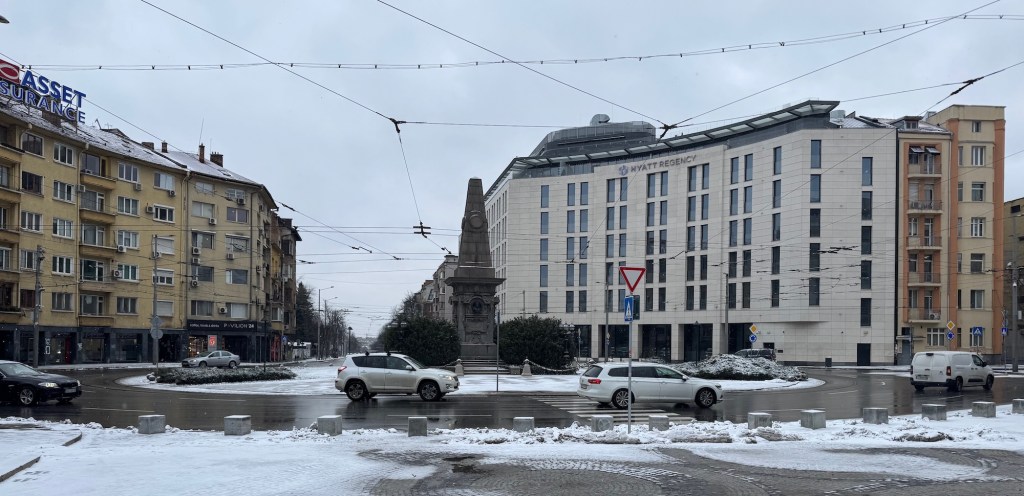
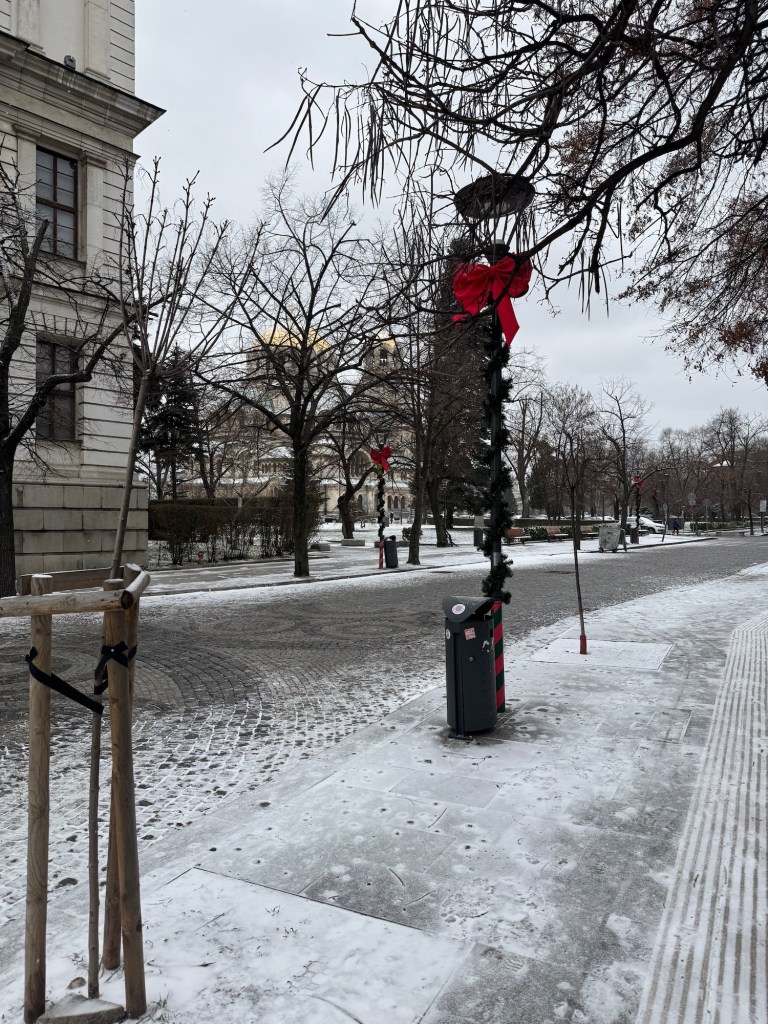
From left to right:
The National Library, which I’ve only visited once in my life
The anti-trash protest with the modest pile of trash
The Levski Monument, with a photo that deserves a post in the Communism series because of the iconic Serdika Cinema
The Church, with a bit of the Square 500 gallery to the left
Sofia Tech Park with one of the surrounding office buildings
And in all the photos, the sky, wondering why anyone would go outside on this dark day.
My kids go to school with backpacks. Their backpacks tend to be large and capable capable of carrying over 10kg of weight. The modern education system in Bulgaria relies on thick, glossy textbooks and lots of printed material, which makes them heavy. I also go everywhere with a large backpack, full of necessary items.
Back in the 80s, as true commies, we had another solution to the problem of how to bring all of our items to school, apart from not having much to carry. We used nylon bags like the one below (found for sale on a local marketplace site). The more colorful it was, the better. I had the exact same as the screenshot, and I’m pretty sure it lasted almost a year. Changed many while in school, and wasn’t picky.
Of course, they couldn’t carry 10 kg like modern backpacks, but they didn’t need to. We had far fewer schoolbooks and used light textbooks. We also didn’t need to carry everything to class. Books were usually only needed at home, for the brave ones who ever opened them. I don’t think many of my classmates did.
As for the images on the bags, foreign cigarette brands were the most popular. The more colorful and unfamiliar, the better. These bags were worth serious money and could be purchased from the flea market “Bitaka”. Getting a new one was a big event. I just don’t see any dopamine high in modern kids’ lives that’s similar to this experience, perhaps getting an iPhone.
Speaking of cigarette brands and why Marlboro of all things. We grew up with access to smoking. My classmates smoked since a very young age, probably under 10. However, the cigarettes available were local, and everyone wanted the foreign, which weren’t officially available anywhere. So, Marlboro, Camel, JPS and such were primarily imported by tourists, truck drivers, and visitors from the West. Even if you could get your hands on an empty pack, it still had value. I found 10-ish such packs thrown in the wild as trash and kept them in a glass display cabinet. You could trade them with other kids. And the packs were pretty, unlike the ugly things from the modern times, covered with photos of injuries and dying people.
So the true “socialist look” of the 80s was cheap, fake jeans top to bottom, white local leather sneakers, and a Marlboro bag in hand.
The St. Anna underpass had no lights today. Hordes of people were walking in the dark one way, like in a scene from Pluribus. I was embarrassed to take the photo and only clicked once.
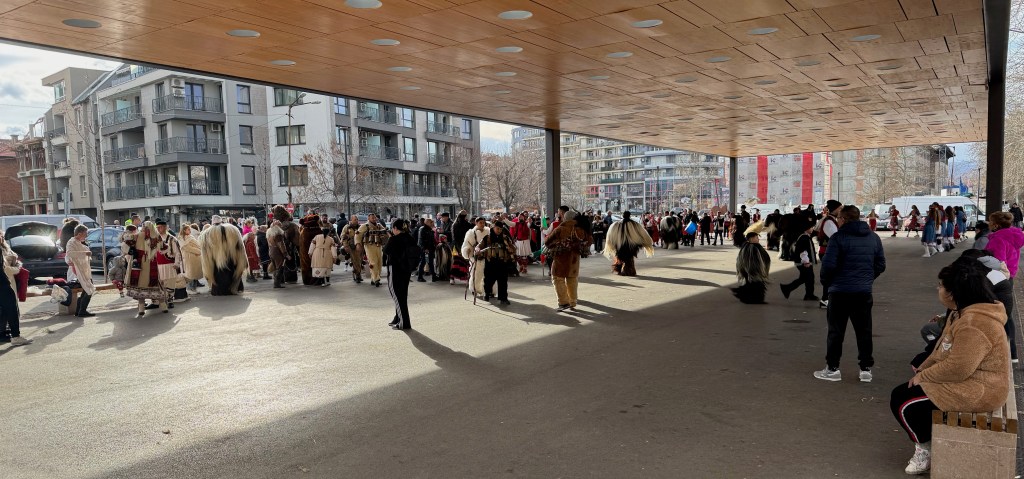
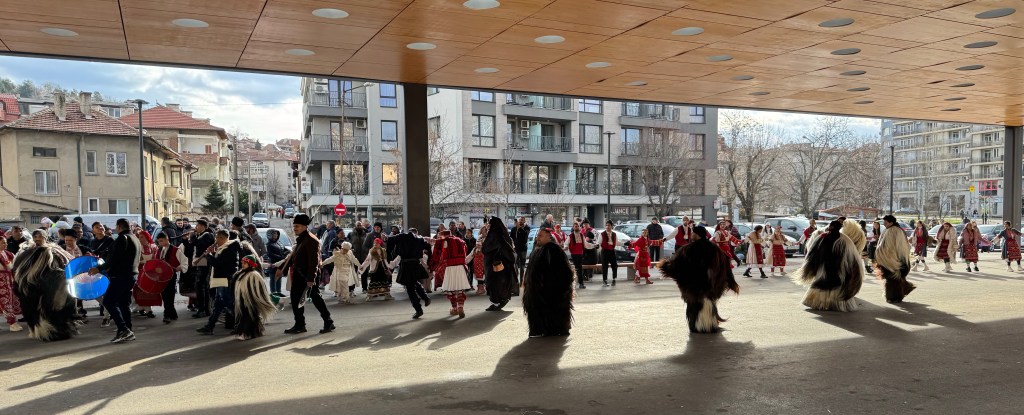
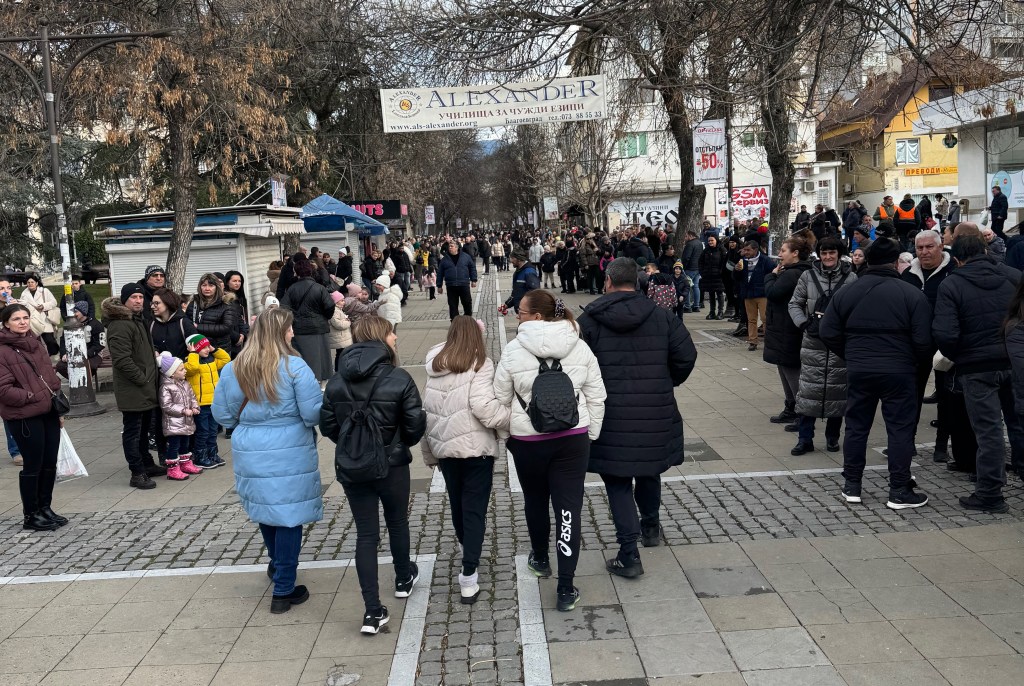
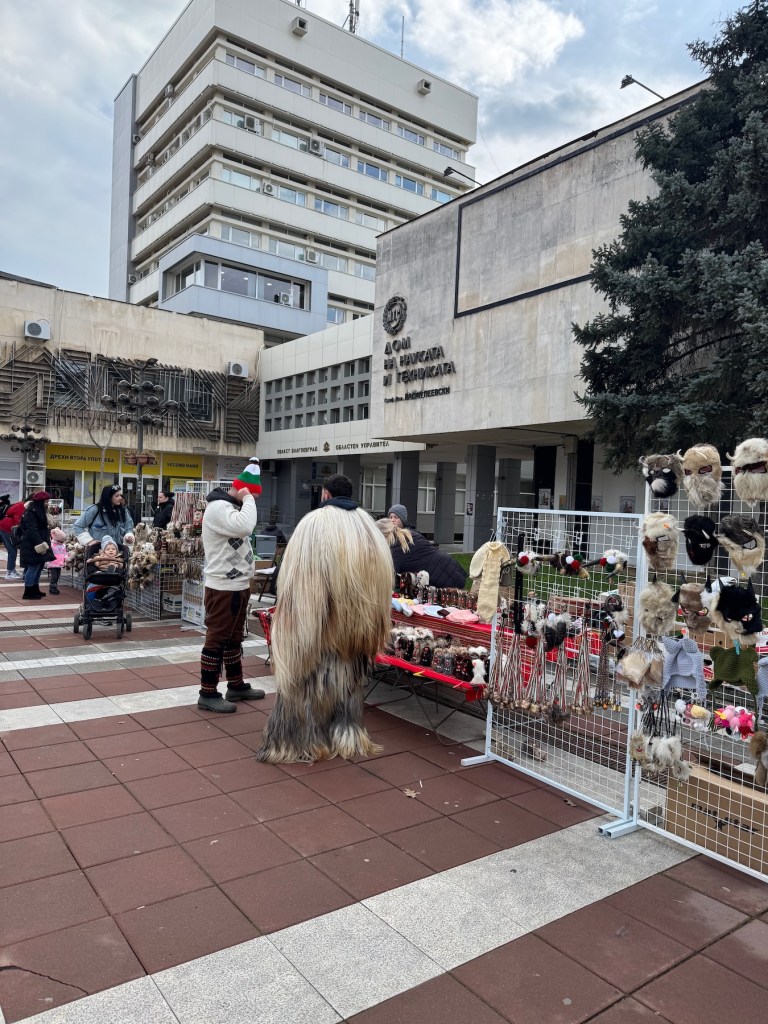
This Saturday, we had a chance to see the actual main event for the Kukeri in Blagoevgrad. They were thousands. The video and the photos can’t describe the sensory shock of getting close to these people. I’m glad to have had the chance to experience it, we normally leave Blagoevgrad earlier and miss it.
One can only imagine how terrifying the national event in Pernik called Surva is.
This post is part of the series about communist Bulgaria between 1979 and 1989. I already wrote posts about my cat and about ice cream. Now it’s time for a revenge trope.
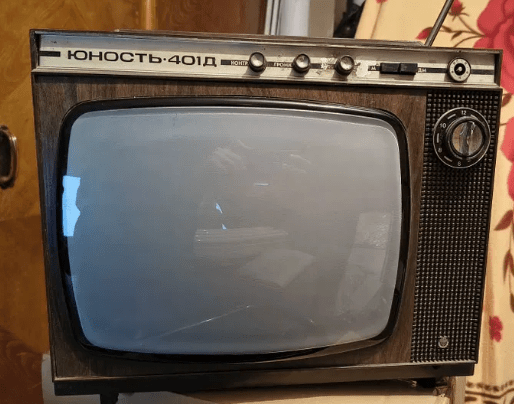
My parents had a Junost TV. This beast is 12.2″, black and white. It had two inputs for antenna cables on the back.
Bulgaria during my childhood had two TV stations, called First and Second Program. Both were part-time: they aired for 5–6 hours on workdays and full days (8 am to midnight) on weekends, with the Second Program being shorter. Both had maybe 1–2 watchable kids’ movies per week, and maybe another 1–2 watchable regular movies, usually on Saturday or Sunday. You had to switch between the channels to find the good stuff, and we always had the TV program published in the newspaper to guide us through this, so we didn’t miss anything foreign.
But I wanted to talk about switching between channels.
The way switching with this TV worked was:
You pulled out the antenna cable on the back of the TV from one of the sockets and put it into the other
Then you pushed a button indicating which antenna was in use
And then this big rotary dial, I think it was also used to click a few times, but maybe not. Why would it exist otherwise?
Whatever the ritual was, I mastered it quickly and did it thousands of times.
Then my parents and grandparents got color TVs and moved the Junost to the kitchen. My parents didn’t let me touch their TV, but my grandparents didn’t mind. My grandfather was nearly blind and couldn’t do it himself, so I had the right kind of encouragement. These TVs had a more complicated system with stored channels that was essentially the same dial and the same button, multiplied by 16 stored “channels” through 16 dials.
So, by the end of the 80s, I was the master of setting up TVs to play First Program, Second Program, the Russian TV, and, in some parts of the country, the Serbian TV. Now I’ll have a short break, and please don’t switch the channel.
The way people went on vacation during communism and shortly after was mostly through “cards” provided by their employer or another institution. My parents got a card for 20 days in the mountains, in a health resort with mineral water in Velingrad. By health resort, think of a 4-story building with modest rooms, with four single beds each, a canteen on the ground floor, baths with a pool in the basement, and a TV area on the second floor. The TV had 30-ish soft chairs arranged in front of it. The area was comfy, and the kids spent lots of time playing there. Given that TV mostly aired in the afternoon and evening, there were no people watching TV before, let’s say, 4 pm.
It’s a weekend day, and the kids’ movie will be at 3 or 4, on channel one. An hour later, an episode of some soap opera will air on channel two. The TV is an older model with a dial, a cable that needs manual moving, and a button that needs to be pushed to switch the antenna, not that much different than our old Junost. So all the old people were already there by 2, even before our kids’ episode, so they could get good seats for the soap opera later. There weren’t enough seats, but kids would leave after our movie, freeing some.
So when the time came, the king of the dial executed the clicking, pulling, and rolling sequence to change the channel so the kids’ show would show up. By the time I was done, my seat was taken. “Hi, I was sitting here?” “Oh, you’re so young, you can sit on the floor.” Uh. True. I can. I sat there, and when the kids’ show was over, I ran back to our room.
One hour later there was a revolt in the TV area. None of the adults had any clue how to switch the channel. The TV got all messed up. The adults figured out that I was upset because someone took my seat and that’s why I left the area without switching the channel. So they freed it, and sent a delegation of a few friendly grandmothers to our room to invite me to take my seat back, and please switch the channel. I switched it two minutes before their episode started. Not sure if any lessons were learned but the kids didn’t have problems with watching our afternoon episodes after that.
I’m mildly embarrassed by the story but we can’t change the past.


 Veselin.blog
