The August Pile of Books

I read 9 books in August. Pretty happy with that achievement, although two of these were very short.

Best books

  • The Dry by Jane Harper, and the series about Aaron Falk. It’s a quiet mystery — cozy and depressing — that doesn’t fit the usual mold. I enjoy books with a lyrical style, where the story is secondary to the writing itself. Jonathan Moore writes like that.
  • The Goblins Return by Lubomir Nikolov. It’s a fun and refreshing gamebook that touched my childhood memories. The book’s content aged well, though the pages were yellow and brittle.

Worst books

  • Six of Crows – a popular young adult novel where teenagers act like elderly gang members. There’s a 17-year-old leader with a cane who is too mature to have a girlfriend. Nobody has acne or other problems appropriate for their age. The storytelling was nice and smooth but the details felt dubious. I think the good execution compensates for the bad details and gave it 4/5.
  • Orconomics – some people walk around in a fantasy world and wait for the main character to awaken as The Red Beard. I’m actually looking forward to the continuation. The Red Beard was kind of cool and the absurd world can be a feature.

The Dry by Jane Harper, Book Review

Drought is hitting hard in a small Australian town. The livestock is dying, the river is empty, and people are losing their minds. A man kills his wife and one of their children before turning the gun on himself—or at least, that’s what everyone thinks. But his childhood friend, who is also a cop, isn’t so sure. Are there other suspects lurking in the dry bush?

This book feels like a modern version of Agatha Christie. All the suspects are right in front of you, and every possible explanation is on the table.

Rating: 4.5/5 – It’s a fantastic, well-written book, though it’s dark.

The dry riverbed photo is from Bansko, a day before it rained.

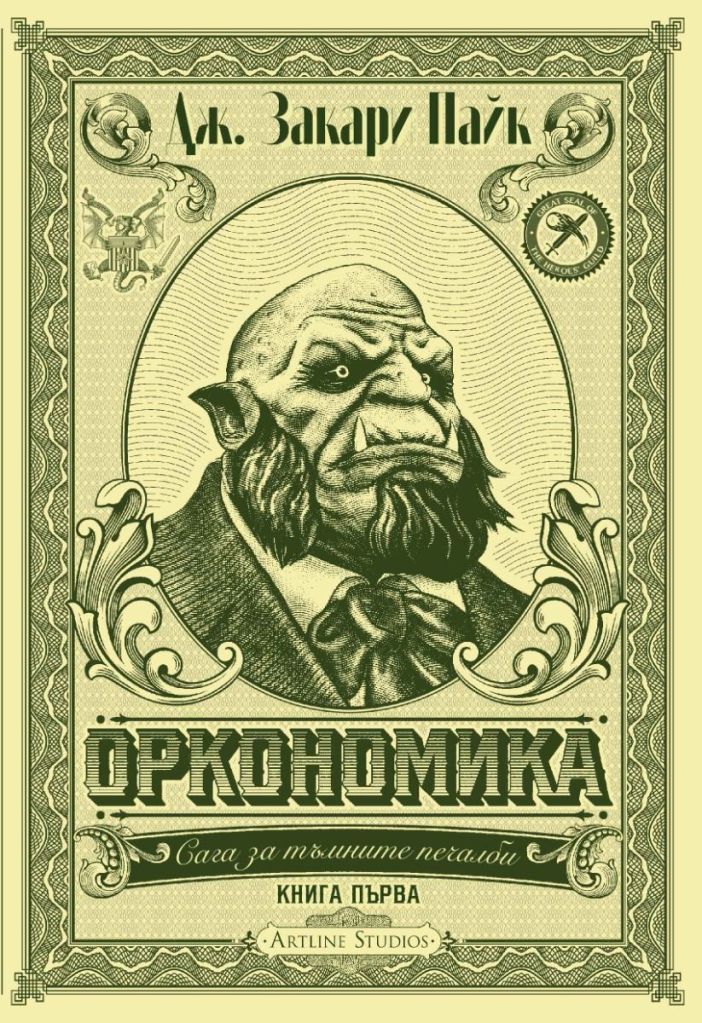
Orconomics

Cover by Artline Studios

I bought this book because I wanted to read something like Terry Pratchett or Douglas Adams. The book wasn’t that. It’s a very serious epic fantasy, closer to George R.R. Martin than Pratchett.

Gorm Ingerson is a dwarf and a fallen hero, who abandoned his mission years ago. Once an unstoppable slayer of monsters, he now lives under the radar of the major treasure-hunting enterprises. He must join forces with others like him to chase stolen, powerful artifacts and return them to an owner of their choosing.

While the mission is so-so, the world is wow. It’s a boiling can of worms that can’t possibly exist. J. Zachary Pike describes at least 20 smart humanoid species with some dominant over the others, like a fantasy version of Star Wars. The issue is that most of these races would naturally become endangered unless they have some form of habitat isolation, which they don’t. Here’s scientific proof:

  • The Witcher series has a similar setup with all the possible folklore and Tolkienist fantasy races. Humans meticulously exterminate the “monsters”, making the Witchers less and less needed
  • LOTR has habitat isolation with different races living in separate areas and not mixing much, apart from occasional wars to make the story worth telling
  • Discworld has a situation in which the races are not fighting with each other, somehow evolved together
  • Song of Fire and Ice has isolation but also has Dragons that are endangered species
  • Raymond Feist’s Midkemia world has the evil Valheru, which were wiped out from the universe before the books even began

In Orconomics the mess of intelligent fantasy species was created by magic and the Discworld-like mixture suffers from the Witcher-like problems. Most races are endangered and suffer from a Moriori-style future. The book doesn’t offer a plausible explanation for why or how these species still exist.

A well-written and engaging book with many charming characters, though it’s grimdark and lacks humor. The world is both the best and the worst part of it.

4*/5

Motherless Brooklyn by Jonathan Lethem

4 orphans are hired by a low-level Brooklyn crook and grow up under his wing to become his employees. One day he’s murdered, and the biggest misfit decides to go after the killer. The only issue is that our investigator has Tourette, OCD, and has severe problems interviewing witnesses as he just can’t stop touching them, barking at them, and yelling profanities. This is not necessarily bad, as long as you know the book is about Lionel’s life with Tourette’s rather than a crime story.

Motherless Brooklyn pushed my boundaries in a variety of ways. It’s an intimate read. It shared information about the characters which I didn’t want to know. At the same time, this is what makes it special. Most fiction writers describe characters with mild flaws, like the notorious missing pinky finger. Lionel’s problem is like missing a head compared to it.

Overall, I enjoyed it. 4*/5.