Retribution Falls by Chris Wooding, Book Review

A fantasy world with multiple types of sorcerers, various races, demons, necromancers, and a living sword similar to Kamigoroshi and Nightblood. On top of all that, we have pirates, airships, and fighter planes. Almost like One Piece with aircraft. How cool is that?

Ketty Jay is a plane-aircraft carrier, though it’s more of a dirigible by description. The crew consists of fugitives, people with guilty consciences, or both. Over the course of 530 pages, we get to learn about their sins and weaknesses. Even though they are murderers, thieves, and generally unpleasant people, they somehow manage to stick together. Chris Wooding gives us one or two explanations for why that is, but overall, the crew’s loyalty probably needs more exploration in the sequel.

The captain of the Ketty Jay is Darian Frey. He’s a selfish smuggler and pirate who has the habit of making terrible mistakes. He makes a big one and the book is about his attempts to fix it. We will learn that this was not his first blunder, not even the biggest one. The blunder is that he trusted the wrong person who set him up for a trap. Frey is in a need of retribution. However, Retribution Falls in the book is some Tortuga-like pirate city that makes no sense in a world with fast-moving aircraft, and the Dorian Frey’s retribution is just a coincidence.

The book is long and feels a bit sluggish at times. I could only manage a few chapters at a time before it somewhat hooked me. After that, it was okay—still close to the kind of stories I tend to DNF.

I think a 4*/5 rating is fair for a unique world (5/5), a relatively original story, and a solid group of misfits weighed down by a bit too much detail and some plot holes (2/5).

I plan to read the sequel, but not right away. Currently reading another book by M. Carey and it sets the bar too high.

February In Books

I purchased lots of books in February but only read eight. The two best were the two that had been stuck on my unread shelves for months, if not years. I read them to clear space for other books and was pleasantly surprised.

Best

  1. The Fifth Season by N. K. Jemisin – I have to admit I purchased that because the book cover was pretty. The book itself was written in a strange way but it stuck and I think it was the best for the month, although the competition is close. The volcanic Earth where humans can cause earthquakes and volcanic eruptions is quite memorable.
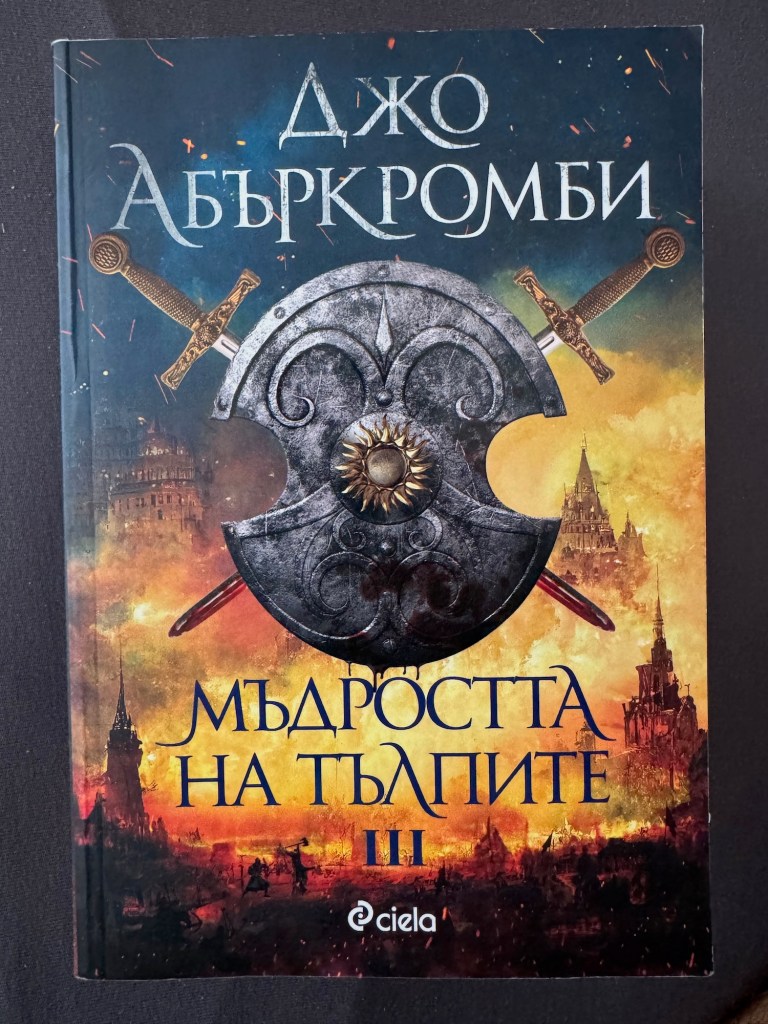
  2. The Wisdom of Crowds by Joe Abercrombie – Abercrombie delivers a lot more of the same in both good and bad sense. The Wisdom of Crowds is mind-blowing but also 750-ish pages, 250 longer than the necessary to be my top pick for the month. Savine dan Glokta doesn’t disappoint.
  3. Nettle & Bone by T. Kingfisher – an excellent short fantasy with a simple idea and a complex magical system about domestic violence, curses, and fairy godmothers. Although a fantastic book and a clear 5*/5, the other two were more impressive. I’ll happily read other works by the same author.

Worst

  • Extremis by Barry Eisler – I gave it 4/5, 2 weeks later I’m ready to adjust it to a solid 3. It was clear what will happen from the first page, and it happened in a slow motion.
  • Operation Star Guest by Lubomir Nikolov – I read the flying saucer book from this post but unlike the other books by the same author, which I frequently award with 5*, this came as sloppy and rushed. We are on a mission to find a flying saucer and contact an alien civilization. What do we do? Worry about food because we didn’t pack any and how to start fire. Yeah, no.

Overall, a good month for reading with a total of 8, five of which got five stars.

How do you overcome reader’s block?

The short answer? TL;DR.

I’ve noticed a pattern with people who start reading. They would pick a book that they really want to read and get stuck with it. A book that makes a statement. For example, I started reading The Engineering Leader by Cate Huston about 6 months ago, and I’ve not reached 30% yet. Not giving up on that one. I know the author, she gave me a copy with an autograph. I will complete that book. But then, I could’ve had a 6-month reader’s block with it, turning me from a person who reads to a person who doesn’t. The same can happen with fiction. I started Brandon Sanderson’s Rhythm of War twice. He’s great, I met him in person, his books are fantastic. But then, why did I get stuck between page 200 and 300 both times?

I think that it’s not about the book itself. The right person at the right moment would not get stuck. But we do get stuck, particularly when we want to have read something rather than enjoy the act of reading it.

Solutions

  • Treat it like a schoolbook. 10 pages/hour, small rewards for each chapter (like a candy). I may end up doing that for Cate Huston’s book because it feels useful and will eventually get through it. This method works well with short-form and non-fiction.
  • Give yourself permission to DNF (Did Not Finish). This is my recommended approach for most books that cause Reader’s Block. Rhythm of War goes here. Works perfectly with long books and fiction. If you can’t get to 20% within 5 days, time to call it a DNF.
  • Don’t start books that will cause it. The probability of getting stuck on a book increases with the length of the book. Too long? Don’t start.
  • Read two books at the same time, for example one on paper, and one e-book. When you get stuck with one, the other will keep the habit of reading alive.
  • Dedicate a block of time for reading. For me, that’s typically 9:30pm to 11pm.

There are still challenges I haven’t figured out. For example, how do I consistently find books I’ll actually enjoy? No clue. I have a pile of unread books at home. Most of them don’t seem as appealing as they did when I bought them.

The Wisdom of Crowds by Joe Abercrombie, Book Review

The book is long. It’s as long as least three different books intertwined with each other. It ends with a full novella after it seems to be already over. The characters drop memorable wisdom, full of logic, all the time. I don’t remember them exactly, but you get the idea—those kinds of insights. About the right moment, survival, and common sense in everything.

The revolution is vividly described, resembling the Bolshevik Revolution, the purges after World War II, and the Great Bourgeois Revolution from a more distant past. There is a lot of bloodshed, and it’s tragic. Somehow, the inquisitors from the previous regime are at the heart of it because the big change can’t go that deep.

I recently published a post which featured Savine dan Glokta as one of the most badass female fictional characters. She’s the only likable person in The Wisdom of Crowds. She would try to make the right things, although not too hard. After all, according to almost everyone in the book, survival is more important than fairness. Those who believe otherwise tend to leave the series quickly.

I’d say Joe Abercrombie managed to surprise me with his long-term planning because the seeds of this story were planted thousands of pages earlier. The format breaks away from the pattern of the previous ten or so books. In my opinion, this final installment—at least for now—is the best. Leaves a lasting memory and makes you think.

5*/5

Daily Harvest

I got 3 new gamebooks from the 1990s today. Planning to read toe UFO one soon.

All three are on subjects that fell out of fashion in the literature over the years. Flying saucers, samurais, and the Vietnam war. I hope at least one is actually good. Has to be the flying saucer 🙂