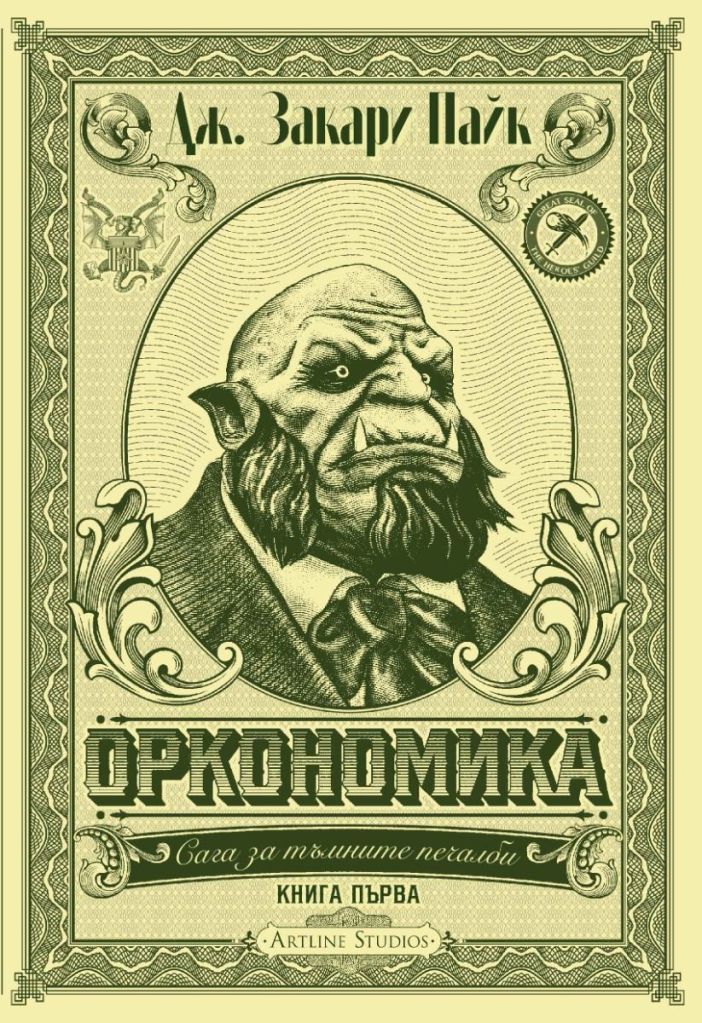
Orconomics

Cover by Artline Studios

I bought this book because I wanted to read something like Terry Pratchett or Douglas Adams. The book wasn’t that. It’s a very serious epic fantasy, closer to George R.R. Martin than Pratchett.

Gorm Ingerson is a dwarf and a fallen hero, who abandoned his mission years ago. Once an unstoppable slayer of monsters, he now lives under the radar of the major treasure-hunting enterprises. He must join forces with others like him to chase stolen, powerful artifacts and return them to an owner of their choosing.

While the mission is so-so, the world is wow. It’s a boiling can of worms that can’t possibly exist. J. Zachary Pike describes at least 20 smart humanoid species with some dominant over the others, like a fantasy version of Star Wars. The issue is that most of these races would naturally become endangered unless they have some form of habitat isolation, which they don’t. Here’s scientific proof:

  • The Witcher series has a similar setup with all the possible folklore and Tolkienist fantasy races. Humans meticulously exterminate the “monsters”, making the Witchers less and less needed
  • LOTR has habitat isolation with different races living in separate areas and not mixing much, apart from occasional wars to make the story worth telling
  • Discworld has a situation in which the races are not fighting with each other, somehow evolved together
  • Song of Fire and Ice has isolation but also has Dragons that are endangered species
  • Raymond Feist’s Midkemia world has the evil Valheru, which were wiped out from the universe before the books even began

In Orconomics the mess of intelligent fantasy species was created by magic and the Discworld-like mixture suffers from the Witcher-like problems. Most races are endangered and suffer from a Moriori-style future. The book doesn’t offer a plausible explanation for why or how these species still exist.

A well-written and engaging book with many charming characters, though it’s grimdark and lacks humor. The world is both the best and the worst part of it.

4*/5
Umberto Eco’s Criticism of Dale Carnegie

I never imagined I’d ever read criticism of Dale Carnegie’s ideas in “How to Win Friends and Influence People”. However, this happened last month while reading a collection of essays by Umberto Eco. The collection is called “How to Travel with a Salmon and Other Essays”, and the essay in question likely translates to “How to Be Famous”.

Eco mocks Carnegie and summarizes his famous book down to the idea that if you want to be successful, trick strangers into feeling famous. He uses the example of TV shows that invite regular folks as guests—so many shows, and so successful, that eventually, every person ends up on TV. However, I’m thinking of YouTube, TikTok, Instagram, Twitch, and so on. The success of these apps depends on how famous they make the average user. Give a 10-year-old 1000 likes, and they’ll stay on the platform for years, building a mental image of themselves as the next MrBeast.

Eco brings up the problem that Carnegie’s advice encourages non-genuine behavior. However, having watched The Flintstones, I suspect that genuine human behavior involves frequent fights with clubs, living in caves, and an average life expectancy comparable to squirrels. I’d rather stick to what Carnegie says.

Eco is at least partially right about one thing – most people on the Internet love likes, myself included 🙂

July in Books

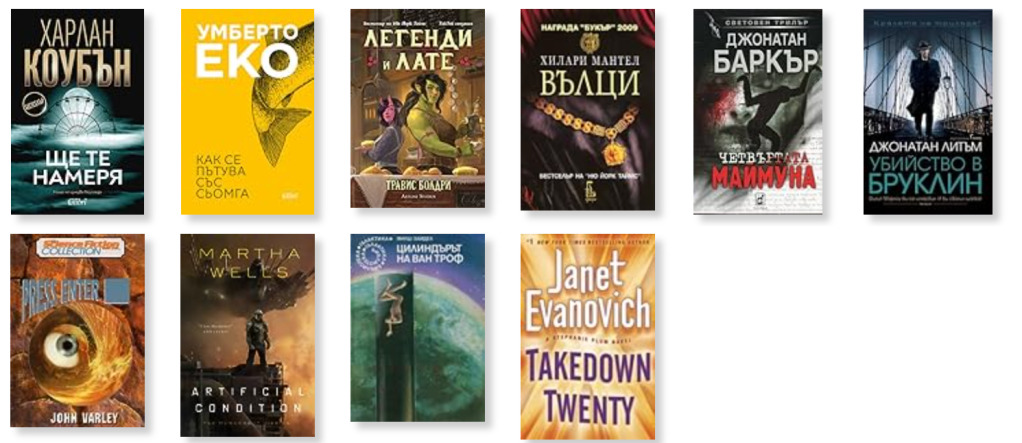
My reading in July was diverse, I had modern sci-fi, classic sci-fi, urban fantasy, history, crime, and one Eco.

Best books for the month (in that order):

Worst books:

  • Motherless Brooklyn. The main character’s exaggerated OCD was too unpleasant

I ranked the Eco with 3* but it deserves a post and I’ll write one when I have enough time to properly do it. A book that deserves a post cannot be that bad. It challenges the teachings of Dale Carnegie. Who does that?

Why reading books matter

A brief essay as a response to this comment thread here, thanks to weirdo82.blog.

Books can make things happen, prevent things from happening, and shape the thoughts of large groups of people. They allow you to see through the eyes of real and fictional characters who have experienced great success and failure. Through books, you can learn, unlearn, and simply relax. They let us crack open doors and look at what’s behind long before these doors were built. The view remains in the shared memory of the readers, it can be analyzed, expanded, disproved, reimagined, or shot as a movie.

Reading books helps you talk with other bookworms, builds your Goodreads ranking, and is an infinite source of topics for blog posts. It also ensures you can read. It’s a challenge with no judgment, just you and the pages. They won’t ping you or complain if you don’t read them and won’t criticize if you don’t read them well.

Reading a page has the impact a fish has when swimming in water. It’s like the impact a bird has when she swings her wings. However, the combined force of all the books written and read led to our present-day civilization, good or bad. Will it disappear if we stop reading? Who knows. Maybe.

Legends & Lattes

Viv is a lady orc, giant and strong. She wants to retire from the bounty-hunting business and open a coffee shop. There will be challenges, mainly from doors to the past that are not closed.

This book is written with the intent of being sweet. The author got tired of Epic Fantasy and wrote an un-epic Fantasy. There’s nothing dramatic in opening a coffee shop. It’s like the first Thraxas, just that the city of Thule is far more ordered than Turai. It feels like an American suburban area.

5*/5