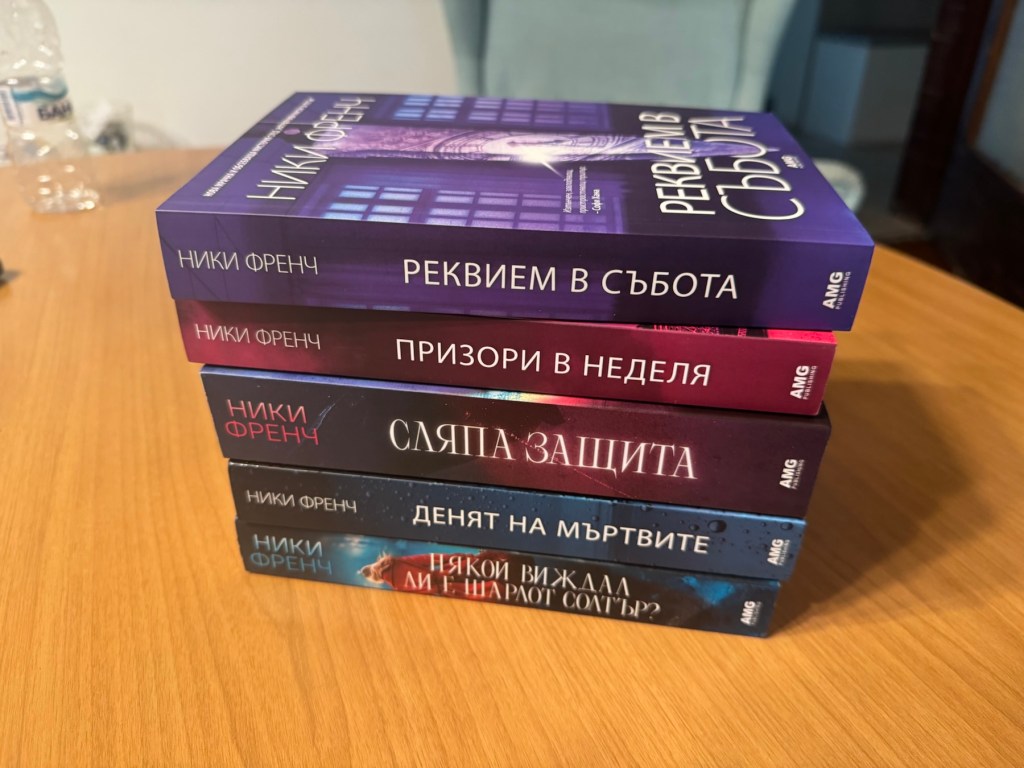
I’m reading the series about Frieda Klein by Nicci French.
It’s a series of 8 books, 7 named after days of week, and one final. Frieda is a psychologist with a medical degree who always has a murder case to solve. She has the persistence of Harry Bosch and uses intuition and advanced questioning to untangle the ball of lies in each book.
The only downside of the series is that it has main antagonists who remain untouched over the series, like some kind of comic book supervillains.
I already finished the first 6 books of the series, having 2 left, and a few more with other protagonists. I gave 5*/5 to 5 of the 6 books and 4*/5 to one, which is pretty high for a series like that.
Dragonfired by J. Zachary Pike – rich in ideas, full of intelligent creatures, and an epic conclusion of the trilogy about the dark profits. It has cobolds and everyone is greedy, except maybe Gorm Ingerson.
Silo by Hugh Howey – a mechanic has to survive in a plausible post-apocalyptic anti-utopia where all remaining humans are stuck in a bunker and tied in lies. I should’ve blogged a book review about because I really liked it, it had this Andy Weir feel I love in books. However, I never got to it. Maybe I’ll write one once I complete book two, which is already at home.
Necromancer by Gordon Dickson – I awarded 3 stars to it but it has an AI that kills all human creativity. It was a great visionary idea for a 1960s book I was surprised to find there, between the future full of old tech. It is one of the main risks I see for humanity when adjusting to the LLM boom.
Worst
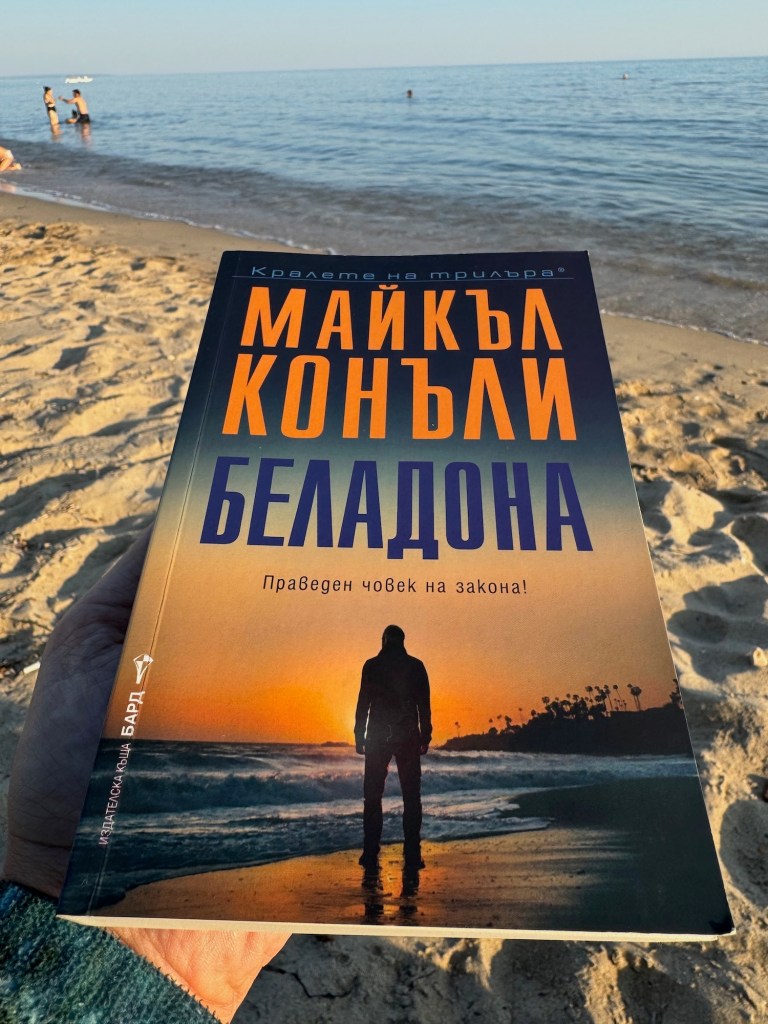
Think Twice by Harlan Coben – after my repeated failures with Lee Child, I start wondering if I outgrew the entire genre. Jack Reacher turned into Steven Seagal, and now Myron Bolitar and his buddy Win are turning to Paw Patrol. I can’t read another one that silly and think about getting rid of my Harlan Coben shelf like I did with Lee Child. It will open space for gems like the next one.
Don’t look back – a gamebook that got a well-deserved average of 2* on Goodreads. It was silly in a very disturbing way.
Both books had a moment where the main protagonist just enters a room, kills 3-4 NPC characters, and leaves the room without ever mentioning that again. I should’ve awarded both with 1* for being disturbing and 0 for their editors, if they had any.
Other
The Golem and the Jinni, Diablo, and Bion 3 were fine. I may read the continuation of Diablo because it may have necromancers, the continuation of Bion to support the publisher, and would not read the continuation of the Golem and the Jinni. I think the story concluded well and should remain like that in my mind.
April was not a great month for reading for me. I missed the first 10 days and then read a few short ones for the number. Nevertheless, some mind blowing books came out of it. Few but good.
Best Books
Gideon the Ninth by Tamsyn Muir – the sad story about necromancers who face too much magic and a universe that’s 10K years after the apocalypse. I think some love is lurking in there but it’s not a romance. It’s deeply touching, well written, engaging, interesting, and memorable. It was by far the best book I read this month, and I keep thinking about it.
Careless People by Sarah Wynn-Williams – a former director from Facebook reveals dark secrets from her past work. Mixed feelings here. Her story is awful and at the same time, the genie is not going back to the lamp.
Harrow the Ninth by Tasmyn Muir. A book where the imaginary and the reality are so mixed that I needed Wikipedia to explain the events to me. However, despite the 4*, I feel this book was far more memorable than the next books on the list that I can forget quickly. I plan to get the 3rd part as well but maybe after a break.
The Narrow Road Between Desires – Patrick Rothfuss is a modern classic with his incredible skill of arranging small and tiny events into a larger puzzle. I’d say, a good member of the Cozy Fantasy family.
Cursed by Alex Kosh – 5* but pretty much unavailable anywhere, I was the lucky first reviewer on Goodreads. And also, thematic, it is about ghosts and in line with Gideon, Harrow and the unfortunate sixth book.
Worst Book
Five Broken Blades – ironically, almost identical plot with Gideon the Ninth, which I liked so much. The story is about 6 (no kidding) people trying to assault an immortal king who is both the enemy and the ally. However, unlike Gideon the Ninth, it’s constantly annoying, and none of it makes sense. For example, why 5 blades if it’s about 6 people, and why broken, if nothing is broken? The book doesn’t answer. Maybe the sequel will.
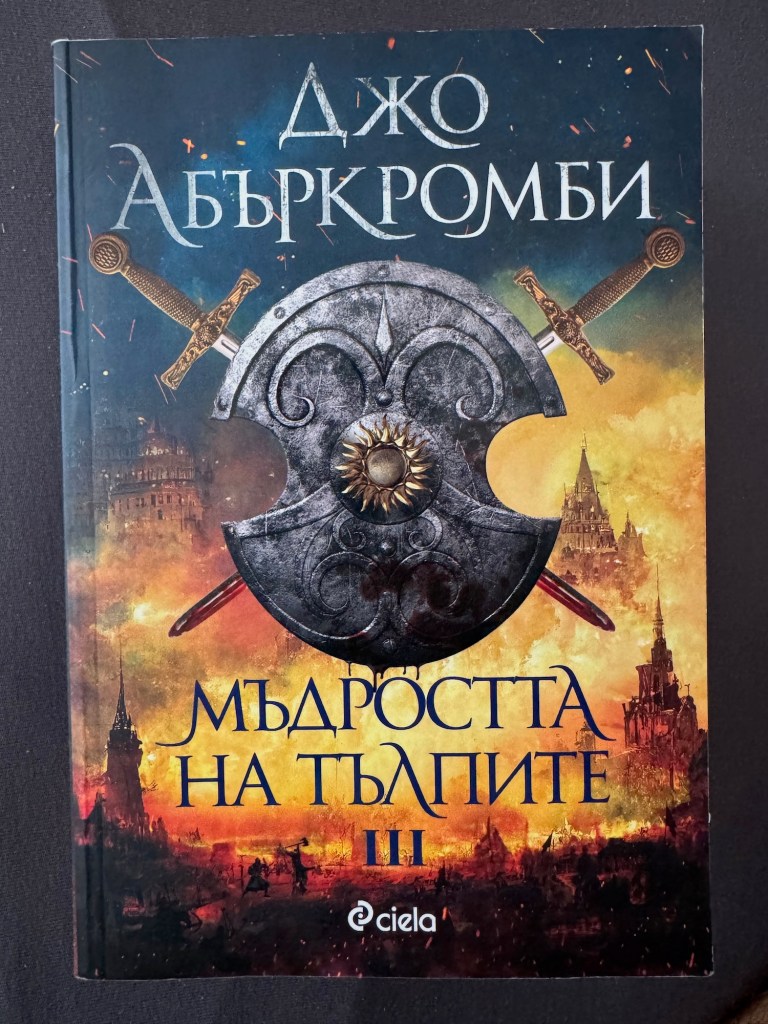
The book is long. It’s as long as least three different books intertwined with each other. It ends with a full novella after it seems to be already over. The characters drop memorable wisdom, full of logic, all the time. I don’t remember them exactly, but you get the idea—those kinds of insights. About the right moment, survival, and common sense in everything.
The revolution is vividly described, resembling the Bolshevik Revolution, the purges after World War II, and the Great Bourgeois Revolution from a more distant past. There is a lot of bloodshed, and it’s tragic. Somehow, the inquisitors from the previous regime are at the heart of it because the big change can’t go that deep.
I recently published a post which featured Savine dan Glokta as one of the most badass female fictional characters. She’s the only likable person in The Wisdom of Crowds. She would try to make the right things, although not too hard. After all, according to almost everyone in the book, survival is more important than fairness. Those who believe otherwise tend to leave the series quickly.
I’d say Joe Abercrombie managed to surprise me with his long-term planning because the seeds of this story were planted thousands of pages earlier. The format breaks away from the pattern of the previous ten or so books. In my opinion, this final installment—at least for now—is the best. Leaves a lasting memory and makes you think.
The smart homicide detective Naia Thulin has to supervise her colleague Hess, who messed up at Europol. They are faced with a case involving a serial killer who leaves rivers of blood and signature little chestnut figurines.
The book is engaging, well-written, but at the same time unnecessarily gory and disgusting. The main characters are repeatedly praised for being intelligent and brilliant, yet they constantly make silly mistakes that reek of foolishness and overconfidence. Real police officers probably make similar errors, but sometimes it becomes too much. Some of the mistakes feel like they’re straight out of a comedy horror movie—like when someone sits in front of a slowly moving steamroller for 15 minutes without taking the one necessary step to avoid getting hit.
The style is a mix of Chris Carter’s blood-soaked descriptions and the demigod hidden villain trope from The Mentalist. The Chestnut Man is excessively elusive, like Red John, but slightly more believable. His motivation is fully revealed and obvious almost from the beginning of the book. In this regard, The Mentalist falls short. Also, Hess is nowhere near as gifted as his TV counterpart, which makes the story far more interesting.
Naia Tulin is supposedly the lead character, but overall, Hess gets more page time and does more of the actual investigating.
Objectively, I’d rate the book around a 4.5—about 150–200 pages longer than it needed to be for a solid 5. What I didn’t like doesn’t make it a bad book, just slightly incompatible with my tastes.
I’d read other books by this author but maybe not right now.