3 people died over the last years in a small but flourishing Australian town. It’s all written off as accidents but a body is missing and Aaron Falk will start digging. Most of the book it’s not even clear he’s investigating. He doesn’t do much other than enjoy the hospitality of his friends, and whenever he notices something, the writer doesn’t tell us what. However, he’ll find clues and solve all of the cases. It’s all hidden in front of our eyes.
The big issue? This town is way too good. Can Aaron go back to the big city as a federal agent after seeing how all these people live?
I give it 4*/5 and despite the sub-optimal score, I enjoyed it and would read a continuation if one is ever written.
The shelf naturally formed with other low-stress books like Travis Baldree’s Legends and Lattes, two Brandon Sandersons and 3 gamebooks. I have some reading ahead of me.
When I write book reviews, I often mention the level of realism. Imagine a scale from 0 to 10. 0 is complete BS, things that can’t happen, heroes that can’t exist, and a path from start to finish that’s like a fairy tale. 10 is a boring autobiography by a boring person who doesn’t lie to put themselves in a good light. Realism is not required to have fun, a good story can be 0 or 10 on the scale.
Let’s rank some pop culture on the realism scale.
0: Avengers: End Game – a complete disconnect with reality, written entirely to be like that. The characters are only visually human
1: Star Wars Episodes 4-6 – a complete disconnect with reality but some of the characters make sense, like Jabba the Hutt. I’d put here most of the fantasy I read like Thraxas, Joe Abercrombie, Raymond Feist, the LOTR universe, Robin Hobb, Brandon Sanderson, Harry Potter
2: Matthew Reilly, often featured here, writes about cars flying at a speed of 700km/h and crashing with no harm. Not far off from F1, although the characters are inhuman. I feel like he deserves the number 2 spot for himself.
3: Stephen King plugs in plausible humans and outcomes in impossible fantasy settings. His work is incredible and diverse work but let’s average it to 3. 3 would be fantasy with a possible story or with possible characters but maybe not both
4: The Foundation, Andy Weir – the classic sci-fi where the people look real and the events could eventually happen
5: Song of Fire and Ice – lots of that happened in medieval times, or at least people imagined it did. Not the dragon eggs but the other stuff that fills 95% of the pages. Realistic fantasy, dystopia
6: Alexandre Dumas. The Three Musketeers has a solid foundation in reality and the characters are likely based on real humans, perhaps from later periods
7: Cinderella. That probably happened and was later decorated with some magic
8: OMG ❤️, Stephanie Plum, Harry Bosch’s universe, Harlan Coben, the true crime stories
9: Historical fiction, books like Wolf Hall that are as connected to the real events as they could be, autobiographies with some level of commerce
10: Boring autobiographies
On that scale, Jane Harper enters the territory of boring autobiographies. There’s “No way” and “Oh, that’s why, yeah, damn”. Reading it is like reading the continuation of Cinderella, the happily ever after where the prince turned into a king, and the king was drunk and cheated.
So, I won’t tell you what the Force of Nature is about, but it’s sad and depressing in a beautiful way. Do not touch if you want an orthodox crime story.
Drought is hitting hard in a small Australian town. The livestock is dying, the river is empty, and people are losing their minds. A man kills his wife and one of their children before turning the gun on himself—or at least, that’s what everyone thinks. But his childhood friend, who is also a cop, isn’t so sure. Are there other suspects lurking in the dry bush?
This book feels like a modern version of Agatha Christie. All the suspects are right in front of you, and every possible explanation is on the table.
Rating: 4.5/5 – It’s a fantastic, well-written book, though it’s dark.
The dry riverbed photo is from Bansko, a day before it rained.
When All the Girls Have Gone is a crime thriller by Jayne Ann Krentz. It’s flagged “Romantic Suspense” on Goodreads but there’s not much romance in it. There’s some in the continuation “Promise Not to Tell”. I picked the book primarily for the good name and wanted to learn what happens next. It reminded me of Harlan Coben. The book was more of a Cormoran Strike story than a Harlan Coben story but it didn’t disappoint.
Women from an investment club start dying and disappearing, and the sister of one of these women rolls up her sleeves to find out what’s going on. Around ten intertwined events take place, tangled like a mess of wires, where everything causes everything else.
About 20 years ago, the main characters survived a deadly fire. A young cult leader had locked the cult’s children in a barn and set it ablaze. They were rescued by a local cop who crashed through the door with his car. The cult’s secrets remain unsolved, forming the central mystery of the series.
Overall, not a bad thriller, and Part 2, which I’m currently reading, is better.
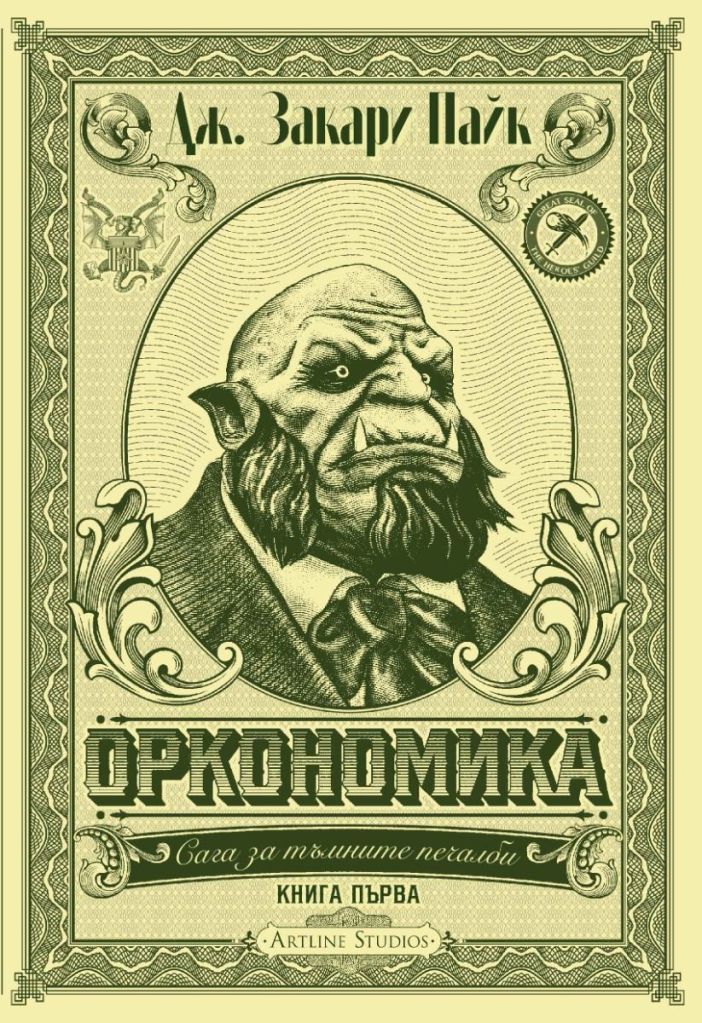
I bought this book because I wanted to read something like Terry Pratchett or Douglas Adams. The book wasn’t that. It’s a very serious epic fantasy, closer to George R.R. Martin than Pratchett.
Gorm Ingerson is a dwarf and a fallen hero, who abandoned his mission years ago. Once an unstoppable slayer of monsters, he now lives under the radar of the major treasure-hunting enterprises. He must join forces with others like him to chase stolen, powerful artifacts and return them to an owner of their choosing.
While the mission is so-so, the world is wow. It’s a boiling can of worms that can’t possibly exist. J. Zachary Pike describes at least 20 smart humanoid species with some dominant over the others, like a fantasy version of Star Wars. The issue is that most of these races would naturally become endangered unless they have some form of habitat isolation, which they don’t. Here’s scientific proof:
The Witcher series has a similar setup with all the possible folklore and Tolkienist fantasy races. Humans meticulously exterminate the “monsters”, making the Witchers less and less needed
LOTR has habitat isolation with different races living in separate areas and not mixing much, apart from occasional wars to make the story worth telling
Discworld has a situation in which the races are not fighting with each other, somehow evolved together
Song of Fire and Ice has isolation but also has Dragons that are endangered species
Raymond Feist’s Midkemia world has the evil Valheru, which were wiped out from the universe before the books even began
In Orconomics the mess of intelligent fantasy species was created by magic and the Discworld-like mixture suffers from the Witcher-like problems. Most races are endangered and suffer from a Moriori-style future. The book doesn’t offer a plausible explanation for why or how these species still exist.
A well-written and engaging book with many charming characters, though it’s grimdark and lacks humor. The world is both the best and the worst part of it.


 Veselin.blog