To Sleep in a Sea of Stars by Christopher Paolini, Review

It takes courage to write something like this and even more courage to read it.

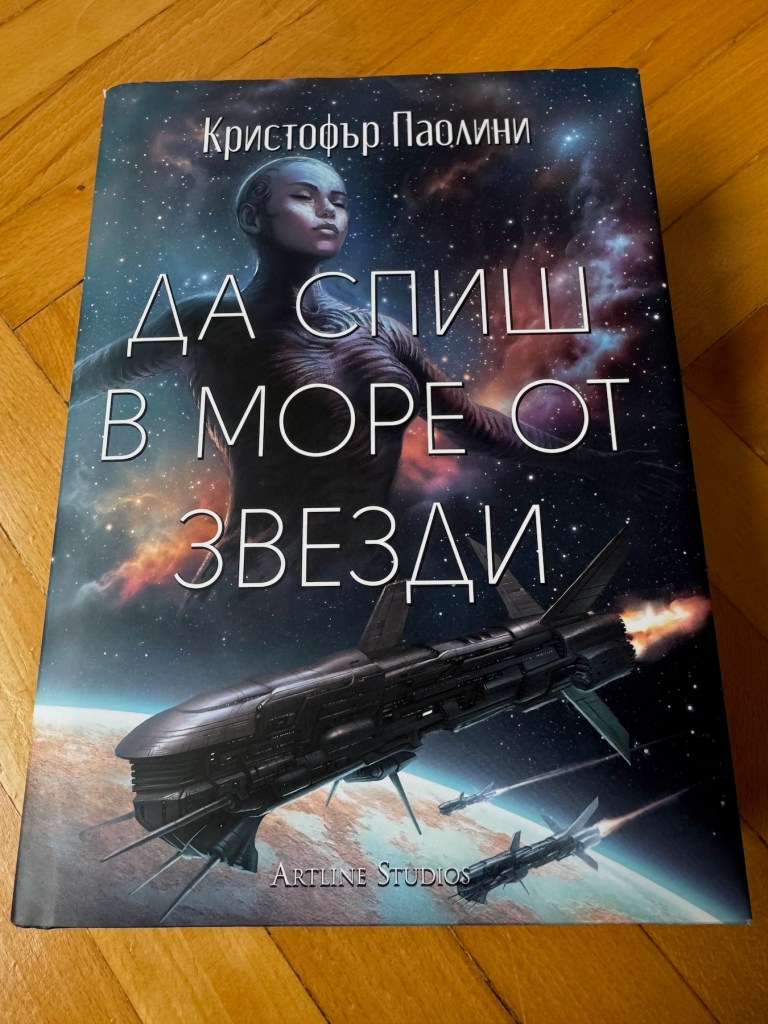
To Sleep in a Sea of Stars by Christopher Paolini is a monumental space opera. It’s 1219 pages, printed in small letters, sprawling across planets, ships, battles, and alien diplomacy. The story meanders between strongly engaging, tolerable, and occasionally exhausting, but it never becomes boring.

Despite its weaker scenes, particularly the space battles, I think it’s an excellent novel. It’s very ambitious, brave, and enormous in scale. It’s not the kind of science fiction you see often.

The premise is fantastic. Kira discovers an alien parasite with great superpowers, reminding me of Venom. Their connection starts a series of catastrophic events that only she and the parasite can stop. From there, the novel launches into a difficult to explain interstellar war. Spaceships fly left and right through the void, missiles hit and miss, long battles, strange species. Nothing to win and everything to lose.

There’s plenty of action, though the book is also emotional and a little sentimental.

I liked it, but I may not try reading another 1200-page space opera any time soon. Kira and the parasite are cool. 5/5
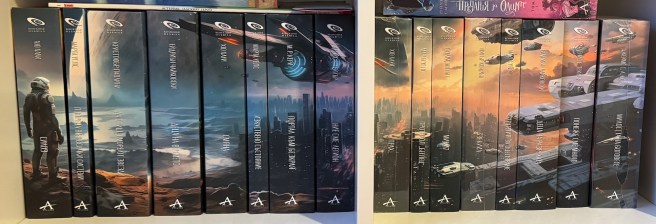
This is row 1 of the Nebula series, Paolini’s book is #3 from the left. 12 down, 3 to go.
The Revenge of the Damned, Book Review

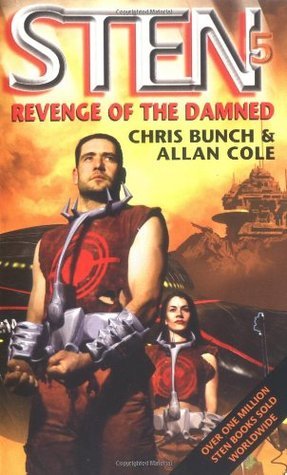
The Revenge of the Damned is something like the closing act of the story arc about Sten fighting against the Taan empire. Over the course of the previous books, Taan had the upper hand – more military power and superior leadership. However, the Empire had a lead in manufacturing capacity and energy production. In book 5, the clash between the Empire and the Taan has already passed its inflection point. At this stage it’s less a question of who wins but more like when and how Sten’s boss wins.

There’s just one small complication: Sten has been captured and now has to somehow win the war from prison.

The book has its good and bad moments. The first part, let’s call it Prison Break, is strong, and the final part probably is too. The middle, however, contains long stretches that read like excerpts from a history textbook, explaining events and background in great detail. These sections are a bit tedious and slow things down. I generally don’t like things being told to me in books, I prefer things shown to me instead.

Several new characters appear, clearly meant to make it to the finale and perhaps show up in future books. There’s a cat-like creature who can’t see in daylight but is exceptionally good with forging, a professional gambler, and a faithful alien with prophet-level beliefs. Alex, on the other hand, feels like he’s running a little low on fuel and is a burden to the story.

At this point, it’s fair to say the main story is essentially finished. There are sequels, but if the series continues, it will probably have to be about something else.

4/5

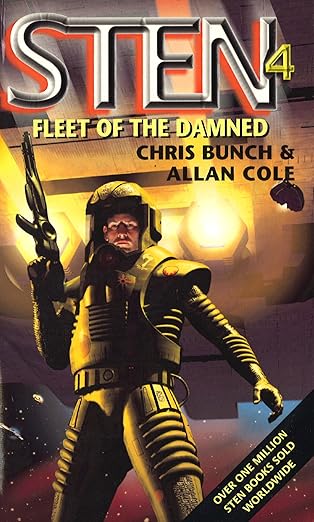
Fleet of the Damned by Chris Bunch and Allan Cole

The resourceful captain Sten joins the navy and leads a small group of spaceships in the battle against the Tahn. The genre is a retro space opera with dumb computers and ships that need hundreds of people to be operated.

The story takes a sharp turn from what we saw in the previous three. It is not light anymore, not fun. It’s also not clear where we are heading. Things get from bad to worse with no improvement possible in sight. The problems presented are interesting, relevant, and engaging. The level of action reminds of Ender’s Game but unlike that book, the characters are not juvenile or cringe. It is very intense.

On a philosophical note, the Empire is ruled by an immortal emperor who controls the space fuel, an antimatter molecule that powers the spaceships. This leads to all kinds of bizarre negative consequences that we can see around us in areas where one person or a small group of people keeps monopoly over something. Emperor’s behavior is in a sense similar to what se see from the aging dictators of the modern age, like Xi or Putin, caught discussing plans to live forever, while also slowly losing their minds.

The book was written before the personal computer era really took off. It aged well. It’s not too realistic because Sten shouldn’t have survived half of the action but it got me. Clear 5*/5 and probably the best of the series until this moment.

Adrian Tchaikovsky in Sofia

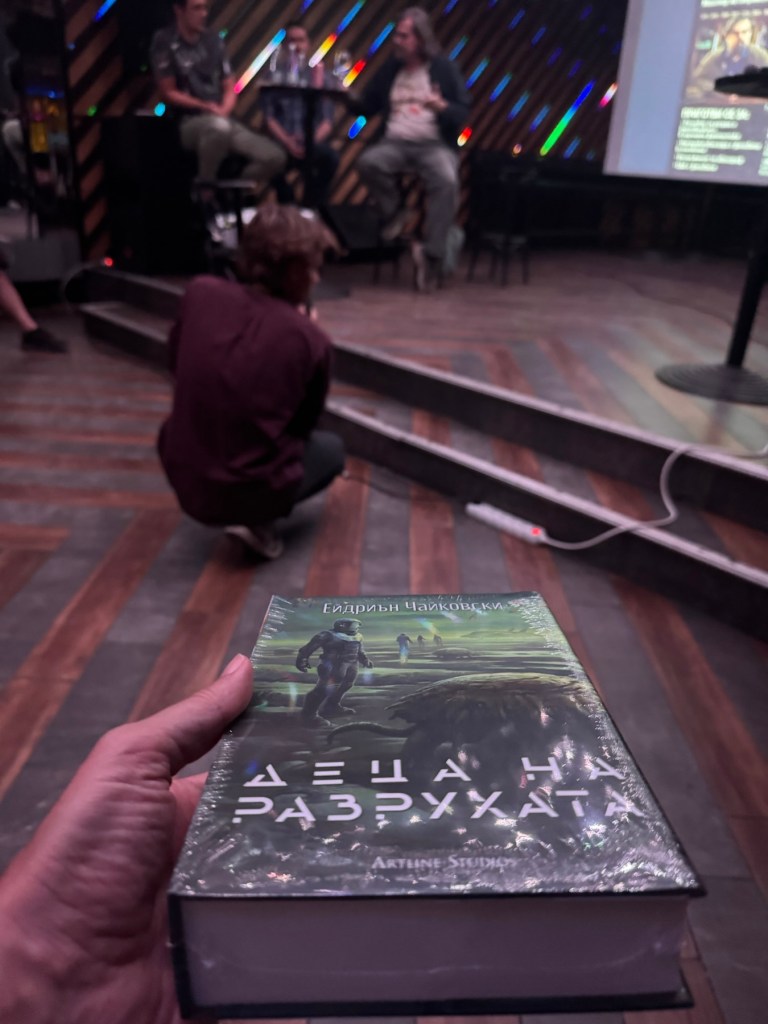
I made it to the book signing with Adrian and got my copy of Children of Ruin signed. Big thanks to the publisher for putting these events together, helps a book blogger gain some good memories, photos, and posts.

The event kicked off with a panel exploring just how alien aliens can be, which was fun and thought-provoking. What would a spider say to a human if the spider communicates by pulling strings? Why haven’t you all read Octavia Butler?After that, we had a short game, a Q&A session, and finally the signing itself.

I’m really glad I got the chance to attend. It was memorable!

Exit Strategy by Martha Wells

I feel a bit silly reading a book that just turned into a TV show.

In book 4 of the series, the Murderbot flies between space stations and faces several attempts to be stopped. However, it has no clear goal or understanding what’s going on, and it’s also not clear why the rich corporations are trying to stop it. We’ll have to wait more books to reach that clarity. Alien artifacts are involved, so it is promising.

This and the previous sci-fi book I read made me think about something else.

The Murderbot is flying through wormholes. Sten in The Wolf Worlds is also flying through wormholes. Assume a wormhole existed, and I flew from point A to point B through a wormhole. No object in space is stationary. Galaxies move towards gravitational attractors, star clusters orbit around the center of the galaxy, and planets orbit around stars. Flying to the other side of the galaxy through a wormhole means that my spaceship will suddenly be accelerated to incredible speeds, compared to the local objects, speeds from which the deceleration may take years. The spaceships in both books do not address that.

There is no plausible space flight, unlike what we see in true 5* sci-fis like Legion or Project Hail Mary. And if we remove the space flight, this book turns out to be a short cyberpunk novel, similar to Gibson’s world, where a heavily modified human surfs the Internet like if it’s a water slide.

For that, I think I’ll allow myself to score this book 4/5, still a great little adventure. The sci from the sci-fi doesn’t add up, otherwise very nice.