July in Books

I had a good month, completed some great books that are easy to recommend.

Best books

  1. The Devils by Joe Abercrombie. I forgot to share a review here, shame on me. But the book is a clear 5*, and a slightly lighter (not in weight though) than the regular Abercrombie story. Some tropes here and there, features lots of random fantasy species. 760 pages and very memorable, well-built characters. You have a priest and a vampire joining forces, not the most common occurrence in literature.
  2. Empire of the Vampire by Jay Kristoff – 1008 pages and a solid 5*/5. The sun stopped shining and the main deterrent to vampires spreading was gone. Also no review, pretty embarrassing, but at least I mentioned it. A must read.
  3. The Blacktongue Thief by Christopher Buehlman – I think that one was around 4.5*/5 but pretty good 4.5, one that would love to read once a second part shows up in the bookstores. The blacktongue thief is thief from a race that has black tongues. Epic fantasy with some drama.
  4. Head Cases by John McMahon – a satisfying thriller about nerds solving crimes. It got 4.5* on Goodreads by me but looking back, I think it’s closer to 4. Despite being a good story, the other three above were much better.
  5. Everything Is Predictable: How Bayes’ Remarkable Theorem Explains the World – pop-sci book about probabilities. I gave it 4*/5 but from the distance of time, I think it’s not up to the 4* bar.

Worst books

  1. Then She Was Gone by Lisa Jewell – Lisa Jewell is a gem, comparable to Freida McFadden. However, just like Freida McFadden, some of her books are pretty awful. Not that the book is poorly written, it’s just not a pleasant thing to read. I gave it 4/5, appreciating the good storytelling, translation and such. I hated this book so much that I’d rather not buy anything else by Lisa Jewell any time soon. Boo.
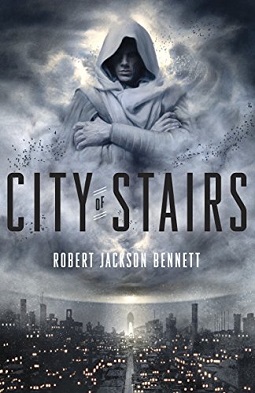
City of Stairs by Robert Jackson Bennett, Book Review

I started my review of the last book by comparison to other books. I’ll start this with a quote.

I learned very early on not to speak to my folk from on high, but to get down with them, beside them, showing them how to act rather than telling them. And I suggested that they should do the same with one another: that they didn’t need a book of rules to tell them what to do and what not to do, but experience and action.

Robert Bennett builds not just a fantasy world but a wisdom system for his series. It doesn’t need to be correct, to be appealing.

The gods were killed 80 years ago. With their deaths, most of their miracles vanished as well, including a large number of buildings from the sacred city of Bulikov. Eighty years later, the gods are forbidden. They can’t be mentioned, studied, hinted, their religions practiced, and the leftovers of their miracles cannot be used. People pretend they never existed, or at least most people.

Someone is breaking these rules. A top spy, the mighty Shara, is sent to Bulikov to figure out the conspiracy. Who killed the expert of the divine past, Efrem Pangyui? Why? Why do miracles still exist?

Dense and likable characters, a rich world, and an endlessly long ending, just like The Tainted Cup. Would I have been able to read this book if I hadn’t read The Tainted Cup? Unsure. But it’s a clear 5*/5 and a great fantasy. Ending with a quote as well.

Forgetting… is a beautiful thing. When you forget, you remake yourself… For a caterpillar to become a butterfly, it must forget it was a caterpillar at all. Then it will be as if the caterpillar never was & there was only ever a butterfly.

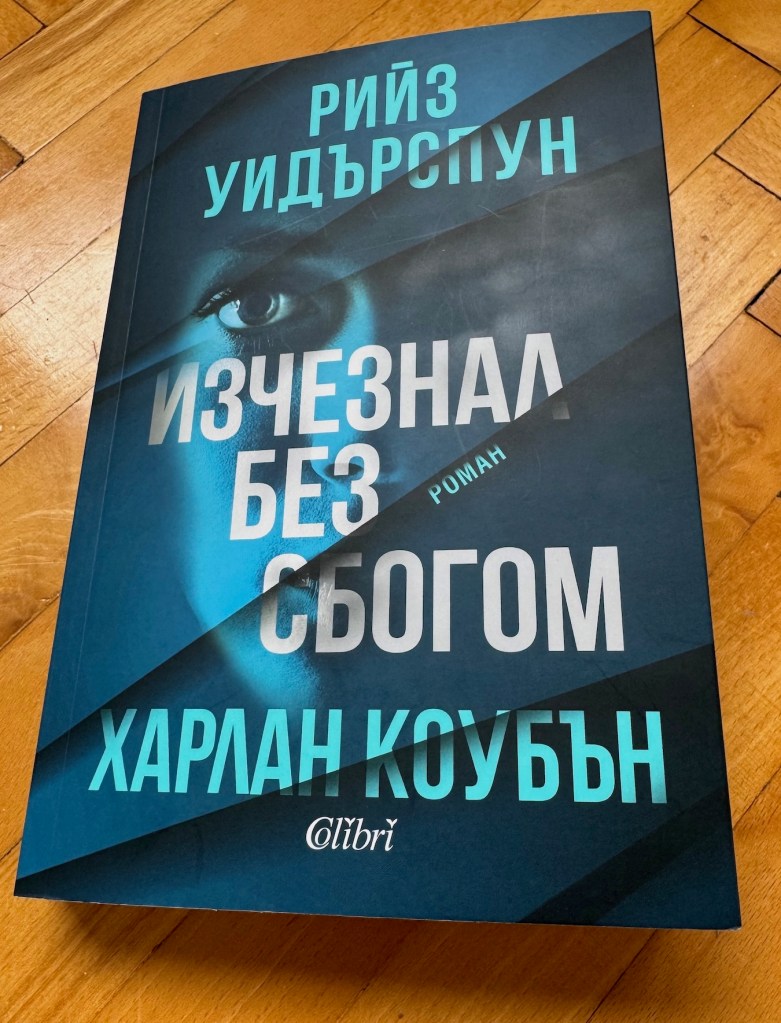
Gone Before Goodbye by by Reese Witherspoon and Harlan Coben, Book Review

I knew it will be a tough book to read because it had bad reviews. It wasn’t easy but wasn’t too bad either.

Alexander Belyaev has a story about a man who is essentially dead but his head is attached to a machine and is still talking. The head is waiting for a compatible headless body so it can be reattached. The story is called Professor Dowell’s Head. You would expect that Gone Before Goodbye is a crime mystery thriller, where we are trying to figure out what happened to the missing person (who’s gone). But it is, in reality, something similar to Belyaev’s stray head.

The book is very well written in most parts, and well translated too. The first 100 pages were excellent; then chaos set in. Maggie, a surgeon who lost her license, is offered redemption if she performs a difficult and illegal surgery. Once she accepts and sells her soul to the devil, people start flying around the globe like there’s no tomorrow and for no clear reason. Perhaps to show off how rich they are.

The resolution is like the head I mentioned. It’s sci-fi and ridiculous. We also have an avatar, living inside a phone, a common trope in present-day sci-fi. These AIs are usually demigods, who can do everything, and so is Maggie’s AI app. Also ridiculous.

Why three stars and not four, for example? Because it is never really clear why anything really happens. The book contains all kinds of cataclysmic and dramatic moments, and not a single one of them is actually necessary for the story. The explanation for everything is that a head is trying to find a body. Characters fly to Russia, billionaire balls are held, some people chase others, while committing grand acts of bravery without any relation to this problem. It’s not exactly a head but you’ll see if you read it. So I felt a disconnect between the great writing style, nice characters, the grandiose scenes, and setup, and the missing link to the actual story.

I could have given it two stars as well because of the publisher’s decision to compact the 350-page book into 300 pages by making the letters tiny and squeezing the letter spacing.

Despite the review, I enjoyed the individual fragments of good writing. 3/5 because of that.

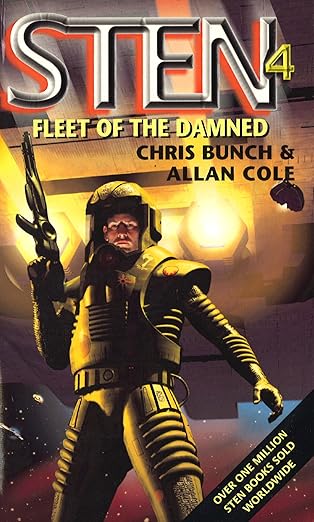
Fleet of the Damned by Chris Bunch and Allan Cole

The resourceful captain Sten joins the navy and leads a small group of spaceships in the battle against the Tahn. The genre is a retro space opera with dumb computers and ships that need hundreds of people to be operated.

The story takes a sharp turn from what we saw in the previous three. It is not light anymore, not fun. It’s also not clear where we are heading. Things get from bad to worse with no improvement possible in sight. The problems presented are interesting, relevant, and engaging. The level of action reminds of Ender’s Game but unlike that book, the characters are not juvenile or cringe. It is very intense.

On a philosophical note, the Empire is ruled by an immortal emperor who controls the space fuel, an antimatter molecule that powers the spaceships. This leads to all kinds of bizarre negative consequences that we can see around us in areas where one person or a small group of people keeps monopoly over something. Emperor’s behavior is in a sense similar to what se see from the aging dictators of the modern age, like Xi or Putin, caught discussing plans to live forever, while also slowly losing their minds.

The book was written before the personal computer era really took off. It aged well. It’s not too realistic because Sten shouldn’t have survived half of the action but it got me. Clear 5*/5 and probably the best of the series until this moment.

Adrian Tchaikovsky in Sofia

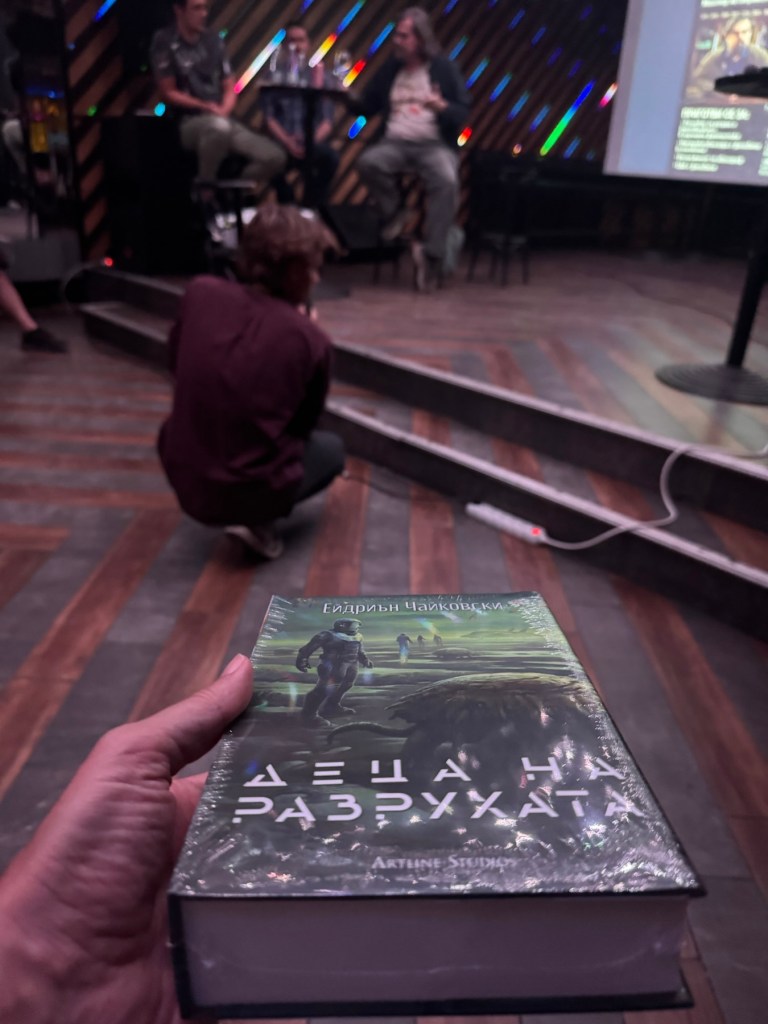
I made it to the book signing with Adrian and got my copy of Children of Ruin signed. Big thanks to the publisher for putting these events together, helps a book blogger gain some good memories, photos, and posts.

The event kicked off with a panel exploring just how alien aliens can be, which was fun and thought-provoking. What would a spider say to a human if the spider communicates by pulling strings? Why haven’t you all read Octavia Butler?After that, we had a short game, a Q&A session, and finally the signing itself.

I’m really glad I got the chance to attend. It was memorable!