Seeing one cockroach under the sink usually means an infestation. Roaches like to hide. It only showed up because the hiding spots were overcrowded.
I like to apply this generalization to software engineering—especially over beer.
If you receive a single bug report about a feature you just launched, it likely means the feature is completely broken. Users tend to work around UX issues and only reach out to support when things are really bad and they have no other options.
That one security, usability, or other issue you noticed in a pull request? If there’s one in the PR, there are probably more in the adjacent code.
A missing space in a code change? That usually means there’s no linting in place.
A missed edge case? It might indicate something is off in our testing process.
The way I defined this Cocroach Rule matches the definition of a Hasty Generalization. After all, one cockroach—or one bug—is a sample size of one. There’s always a chance that a reported issue is an extreme outlier, something no one else will ever encounter. Maybe a high-energy particle hit a chip somewhere. It happens.
But my long-term experience shows that the Single Cockroach Problem largely holds true. It applies in many areas where the difference between zero and one is significant.
Once upon a time, a widow had twin daughters with very different personalities: Djasta Prasta was lively and cheerful, while Cindil Pindil was quiet, hesitant, and cautious. When their mother gave them fabric to sew dresses for Easter, Djasta Prasta eagerly began working—cutting, sewing, and fixing mistakes as she went—finishing her dress in time for the celebration, even though it had issues. Meanwhile, Cindil Pindil spent so much time worrying about making mistakes that her dress remained unfinished.
When the festive bells rang, Jasta Prasta joined the dance in her new dress, while Cindil Pindil stayed behind the fence, watching in tears. From that day on, people say it has always been so: “Cindil Pindil behind the fences while Djasta Prasta dances”.
This is a short version of the Bulgarian folk tale, written byGeorgi Raychev in the 1930s. It became part of the culture of my generation. Felt inspired to publish it here after mistakenly sent out a test post to my subscribers. Sorry about that! 🙂
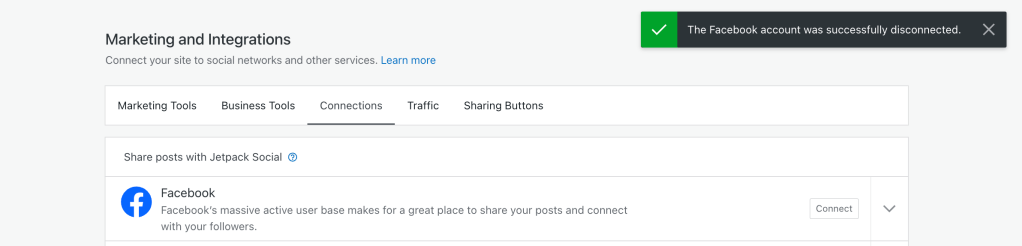
Facebook keeps flagging my posts as spam. I’m not sure how that happened. Is it an AI assuming that my achievement post about a walk under 10 min/km is spam? Maybe one of my followers on Facebook flags me? It doesn’t support any way to be challenged other than using court. The court process is not a path I want to pursue. That would take over a decade for my country, and I might be the first one in the whole country trying it.
What in a fitness achievement post with no links, on a site with no ads or affiliate links is spam, remains unclear. Facebook does Facebook things.
Here’s my response:
This is one of the reasons why the open web and WordPress are so important, and the walled gardens are evil. Facebook offers no way to challenge a decision like that. A blogger whose income depends on this connection could experience a detrimental impact. I lose access to promoting my posts to the 3-4 friends and family who check it on Facebook. Not pleasant but not terrible.
EDIT: I actually found a link that allows challenging the decision and clicked it.
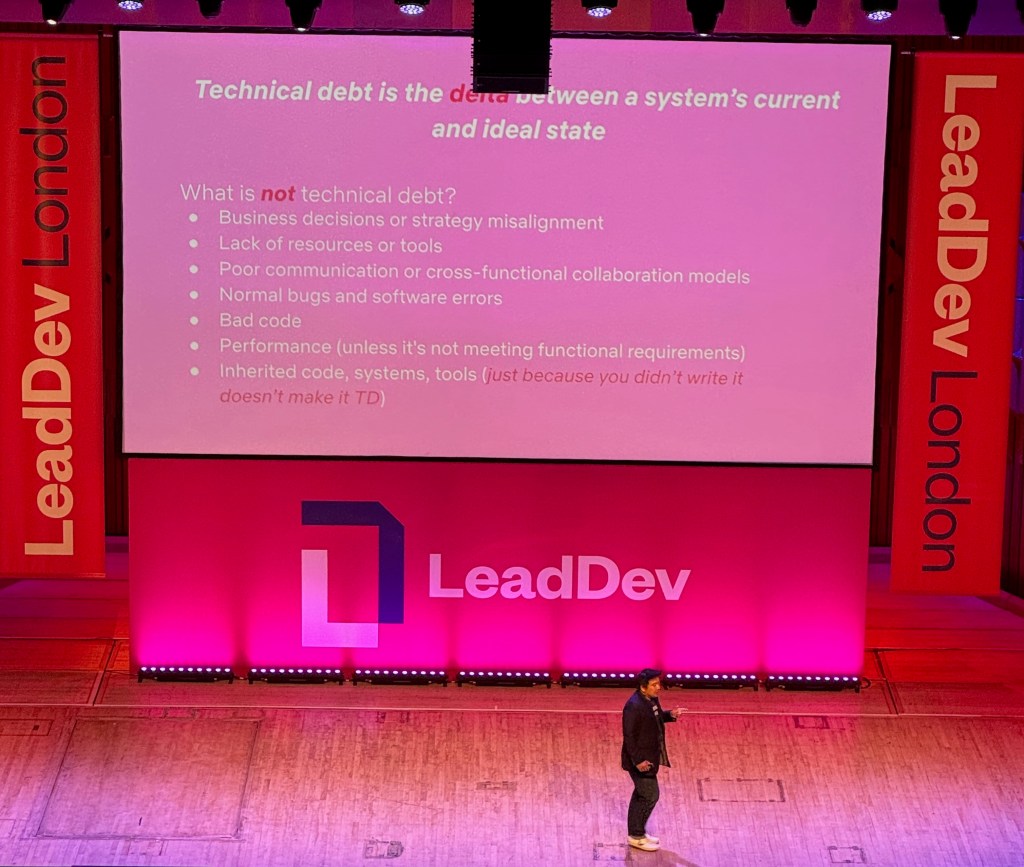
This is Bruce Wang from Netflix with his inspiring talk about Technical Debt. I enjoyed his talk and wanted to write about it but as it turns out, I’m opinionated on the subject and would like to share my thoughts rather than his. Bruce says Technical Debt is the delta between the current code and the ideal code. I think Technical Debt is when a coding team takes a shortcut and comes up with a solution that mostly works but needs future changes. The work that’s needed and may never be done is the debt.
Samples of technical debt from my experience:
Copy/paste, quick and incomplete fixes
Slowly building obscure God classes or long chains of ifs in long functions. All changes are tiny but the final result is bad
Quickly building large and complex pattern-based solutions to simple problems
Using old and unmaintained libraries
Insufficient test coverage or test coverage that’s guaranteed to break for legitimate changes
Agreeing on any kind of a second system and then insisting the old system is the technical debt until either the old or the new system is removed
Out of these, the second system presented the biggest and the most time-consuming challenges. All the other problems can be improved with small iterations but when you have two competing systems, you’ll keep having two until the very end of whatever the solution is.
This code is bad, it will be better to rewrite it from scratch
— An engineer getting in trouble
To my understanding, this is the worst type of technical debt – one that’s hard to repay because the best outcome of the work is that nothing visually changes. Some issues with rewriting:
Old code that’s in heavy use tends to cover many cases. Easy to miss them and produce regressions
The new code tends to focus on the area unsupported by old code so it quickly deviates from compatibility
The old code tends to accumulate changes that are unsupported by the new system while the new system is in progress
The amount of work is usually much larger than the wildest estimates
Migrating from one system to another is hard, and may even be cost-prohibitive
It never gets easier to complete it, and it keeps draining life from engineers doing this or that but never achieving the final result (one system)
Before I continue, note that sometimes rewriting is the only option. 20-ish years ago, I saw a complete ASP/MS SQL website that used horizontally expandable tables. A new record would need a new column. I was contacted as a freelancer to fix it because the owner ran out of columns. The whole thing felt bad beyond repair. It, however, was not a high-traffic or high-responsibility service.
In many cases, the rewrite is initiated when other solutions exist.
Here’s what I’d do if a rewrite of a heavy-use code is suggested. First, I’d come up with a vision for what the final result needs to be, then challenge that vision with honest questions like “Do I need this?”. Most of the time the answer is no, You aren’t gonna need it (YAGNI). With the vision in mind, I’d need to reach the most simplified version of the future version of the code with small iterations that go to production so that there are never two systems and there is no migration between them, for example, by using the Strangler Fig pattern. I’ve done this and it works well enough that nobody notices. And if the second system is started and never gets completed, it soon becomes everyone’s problem.