GothamChess in Bulgarian

I had a period of chess addiction around the time my big kid was 5-7 years old. He showed interest in Chess, so I started learning it to make him a world champion. My kid lost interest in chess quickly but I kept playing and even attended the national championship for Rapid chess, where I had a terrible performance and got my soul crushed.

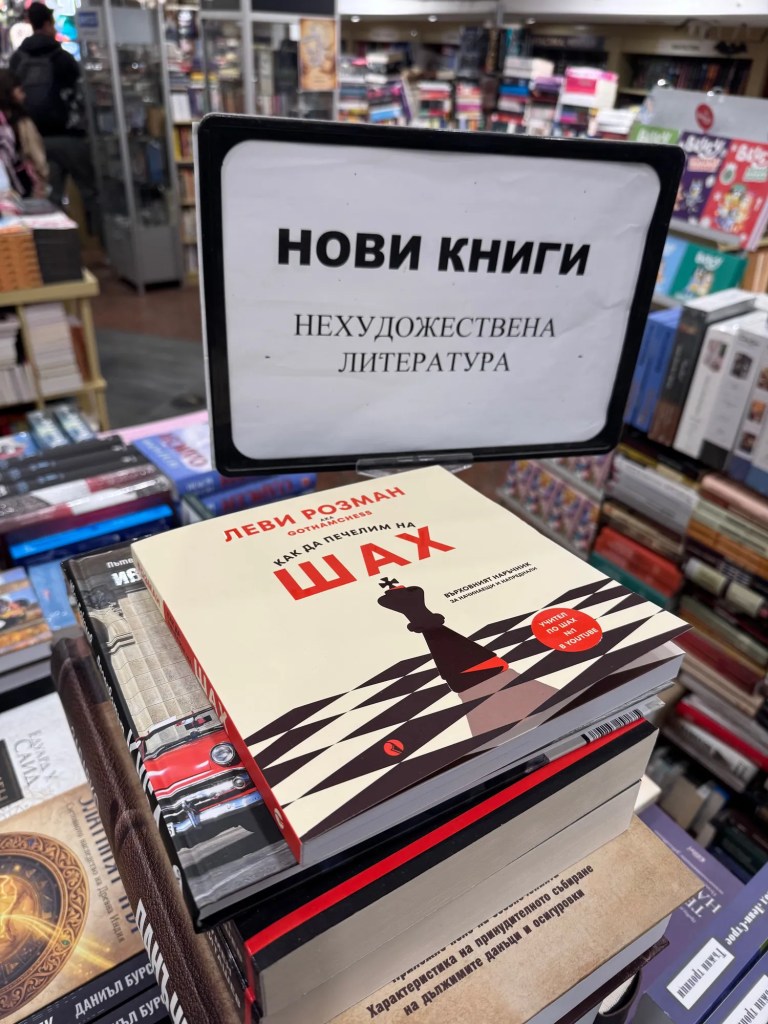
One of the streamers I watched at that time was the then younger Levy Rozman, GothamChess. I even subscribed to his Twitch and bought his courses before switching to streamers, more appropriate for my level. That period of my life ended long ago, I no longer study chess, don’t follow the developments, and very rarely play blitz. But I was surprised to find out that GothamChess grew so much in popularity that he got translated to Bulgarian.

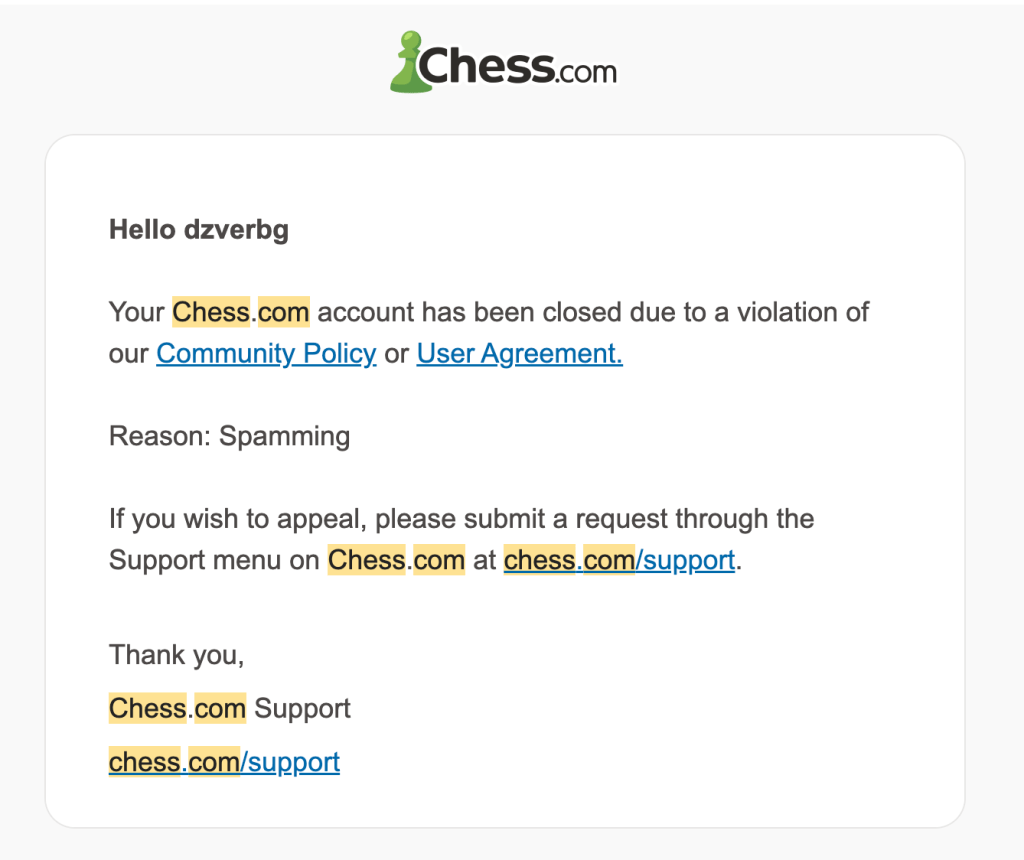
My blog got my chess.com account closed

I was very surprised to find this email in my inbox today. It said my profile had been closed for spam. This got me a bit upset because the last time I logged in chess.com was in 2024 and the only way I could be spamming would be if I got hacked.

As it turned out, I included a link to my blog in the bio years ago, and the anti-spam AI flagged that link as spam. Chess.com’s support bot connected me with a human within minutes, and my account was restored almost immediately. I got a bonus diamond membership, played a few games, and realized I forgot how to play there.

It’s great that chess.com maintains nice human support. Kudos to their support engineer who got my account back. Most online services do not make it easy to reach out a to an understanding human, especially if you’re logged-out. Boo for the AI that messed everything up in the first place.

How to Teach a Kid Play Chess

Chess is a game that should’ve disappeared by now. Chess engines have become so strong that humans can no longer contribute to game theory—except by coding the chess engines. Yet, YouTube is filled with funny and wildly popular chess influencers. As a result, both of my kids have taken an interest in learning the game. Now, it’s time to teach my youngest, who is 6.

Here’s my strategy for teaching the game:

  1. Show the piece movement, arrange the board and start playing
  2. Do not win! Little kids seem to love beating their parents 🙂
  3. Do not take any pieces outside of avoiding check or recapturing
  4. Encourage them to use all pieces
  5. Once you feel like the kid got a basic idea, switch to mini games
  6. Give them 2 rooks and queen vs your king. Let them find a checkmate
  7. Once they find a checkmate, give yourself a pawn and play hard
  8. Once they find a checkmate, give yourself 2 pawns. Teach them how to attack the backward pawn
  9. Once they find a checkmate, give yourself a knight. Teach them forks
  10. Keep adding pieces to the board for both sides until a real game becomes possible

Around point 10 it’s time to find a chess club. This is when the chess became a chore for both of us with the big kid. Also, finding a tick where the kids played didn’t help much. I’ll try to improve the process with the second kid, maybe find a club without ticks.

Do you play in your daily life?

Daily writing prompt
Do you play in your daily life? What says “playtime” to you?

I do some football with the kids in warm months. I also play some bullet chess. I used to play more but kind of gave up my favorite 5-minute blitz games after my second kid was born in 2018. Don’t miss it, TBH. 1-minute chess is sufficiently good and the game ends before it becomes boring. I have no defined time but I sometimes alternate chess with reading after everyone is in bed.

I avoid playing addictive video games. I’ve been addicted to mobile or computer games several times in my life and do not enjoy it. For example, I got addicted to the Bulgarian MMORPG Imperia Online around 2005. Woke up at 4am every night to manage my armies. This pissed off my wife so much that she gave me the talk. I stopped immediately and it was empowering, gave me the tools to interrupt emerging game addictions on demand, which I used a couple of times in the later years.

In 2011, at a company meetup, I met two of the authors of Triple Town, a highly addictive mobile game. They explained how gamification works and how the drops are optimized for producing small amounts of dopamine in your brain to hook you up. I didn’t believe at first and tried their game. Surprise, surprise. I got addicted to it and had to use my painful tooling to stop it. So, whenever I feel the need to play a new game, I try to find puzzle-like games rather than games where you collect items, merge groups of items, or raise stats.

The last game I tried to play was Puzzle Star Battle. It is very difficult, though, I couldn’t solve a single 10x10x2 puzzle.