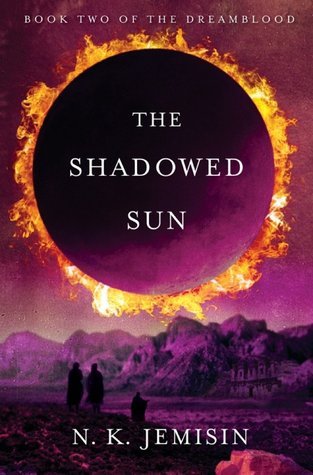
The Shadowed Sun by N.K. Jemisin, Book Review

A revolt is brewing. The occupation of Kisua has turned into something closer to enslavement, and the cultural rift between Gujaareh and Kisua makes the coexistence expensive. The soldiers from Kusia abuse their powers a bit too much and the locals use every opportunity to disobey.

In the middle of it all is our new hero Hanani, an apprentice healer, and Wanahomen, the heir fighting to reclaim what was unfairly taken (according to him). As they find allies and fragile trust, a quiet front opens. A dream-plague slips through the dark and kills innocent people’s souls in their dreams. Hanani is good but this plague kills far more talented healers. Can she stop it while also organizing a war?

If this were a Joe Abercrombie tale, there would be a bloody final battle where the disinterested and the clever slip through the cracks while the idealists and the fools die. But here the clash is inward. The battlefield is the hearts, minds, and dreams.

5/5. A long book, somewhat unusual, and also a bit romantic. I liked it very much but can’t really say why. Had some unpleasant scenes of cruel violence and abuse, but was otherwise good.
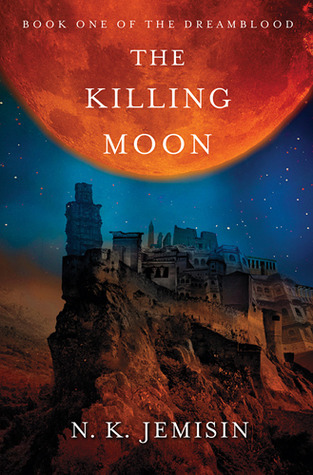
Killing Moon by N.K. Jemisin

The world N.K. Jemisin builds in The Killing Moon is both incredible and deeply disturbing. It’s an Ancient-Egypt-like planet, where magic is drawn from dreams and death by a small group of Gatherers. Human souls are sacred but also sources of magical energy, harvested and consumed by the priests for healing and other purposes.

Only a chosen few, the Gatherers, are trained to collect this dream-magic. They’re moving through the city like thieves, stealing their tax rather than getting it voluntarily. The power of magic gives them a constant urge to take too much, to cross the line between service and corruption. Once that line is crossed, the Gatherer becomes a Reaper, a dangerous, soulless creature, that can end all life.

The concept reminded me of the Cosmere novels by Brandon Sanderson where all magic comes down to soul units, or The Runelords: The Sum of All Men by David Farlang where magic is forcefully extracted from humans at a great cost. Jemisin’s take is equally disturbing, closer to Farlang’s magical system than Sanderson’s. It’s disturbing and unpleasant but this alien world, where human life and honor are worth nothing to the powerful, is not supposed to be nice.

It’s not a comforting kind of fantasy, kind of the opposite of books like Legends & Lattes, and even worse than the Broken Earth series I recently featured here. Despite that, N.K. Jemisin is at the top of her game. Her writing is rich, her world-building precise, and her imagination is uncompromising. 5*/5

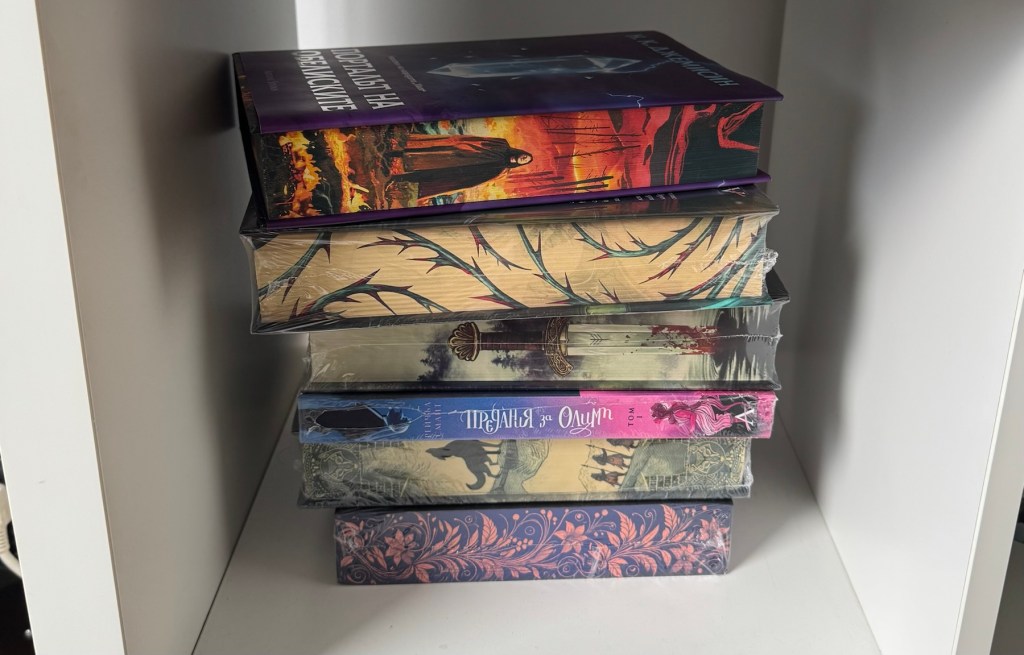
The Obelisk Gate by N. Jemisin

Essun is going after her missing daughter Nassun, while the world is slowly ending. Ash and acid are falling from the skies and the wildlife is eating people in unusual ways.

She finds an old friend instead.

Earth is clearly no place for humans in this series and I don’t need the third book to see where it’s all headed. But there’s a tiny bit of hope that this very unstable world can provide home to humans. So I think I’ll continue with it.

⭐️⭐️⭐️⭐️⭐️ out of 5. Also, the copy is beautiful.

The Fifth Season by N. K. Jemisin, Book Review

In 2006, Liu Cixin became famous with his book The Three-Body Problem. An alien planet struggles with non-periodic but frequent mass extinctions due to the unstable planetary orbit. The Fifth Season is exactly that kind of extinction in the world of The Broken Earth. While the visible causes are usually volcanic in origin rather than solar, the results are similar. Endless civilizations, species, and empires have been wiped out—just like in The Three-Body Problem. Society’s main goal is to prepare for the next extinction, but of course, it is never the same as the previous one. How bad can an apocalypse be to countries which had tens of thousands of years to prepare and lots of experience? We’ll see.

Unlike The Three-Body Problem, N. K. Jemisin chooses to tell the story in a chaotic and confusing way. It is not always clear who exactly the main character is, where the story is headed, or what they are fighting for. The book is written as if I am the protagonist, similar to choose-your-own-adventure gamebooks. All this confusion is likely to make the reading experience more unique and to compensate for the similarity with The Three-Body Problem and the excessive superheroism.

Fantasy has a very limited number of clichés, and the trope of constantly dying and reborn civilizations is relatively new—perhaps inspired by science fiction stories about alien artifacts, like 2001: A Space Odyssey, Rama, The Expanse, Gateway, Alien, etc. While we’ve seen fragments of this book elsewhere, the combination is somewhat innovative. The magic felt fresh—bordering on science fiction. The closest system I can think of is the Midi-chlorians from Star Wars.

Despite the off-putting style, which reminds us a two-page Reddit post without new lines or punctuation, the book is interesting and overall great. I hope the sequel gets translated as well. Curious to see how Jemisin will solve the boringly overpowered superhero problem.

5*/5