We had a special month at Automattic that ended last Friday. For a full month, we could form groups of two people and work on whatever we liked, as long as we are in a pair.
I chose 4 projects and ended up working on 3 of them, discarding the 4th – couldn’t get to it. First was the new Writing Prompts, which was relatively low-tech (on the surface) but pretty cool. Seeing people respond to blogging prompts that were my idea is melting my soul.
The second project was around building a way to assemble good looking landing pages with AI quickly.
A landing page on WordPress.com is a page that tells a story, highlights a feature, or shows something so it’s discoverable. For example, a colleague runs a program that gives paid plans to students. Another wants to show how WordPress.com compares to a competitor. They write content, the content is then designed, and then the design is turned to an actual page by an engineer.
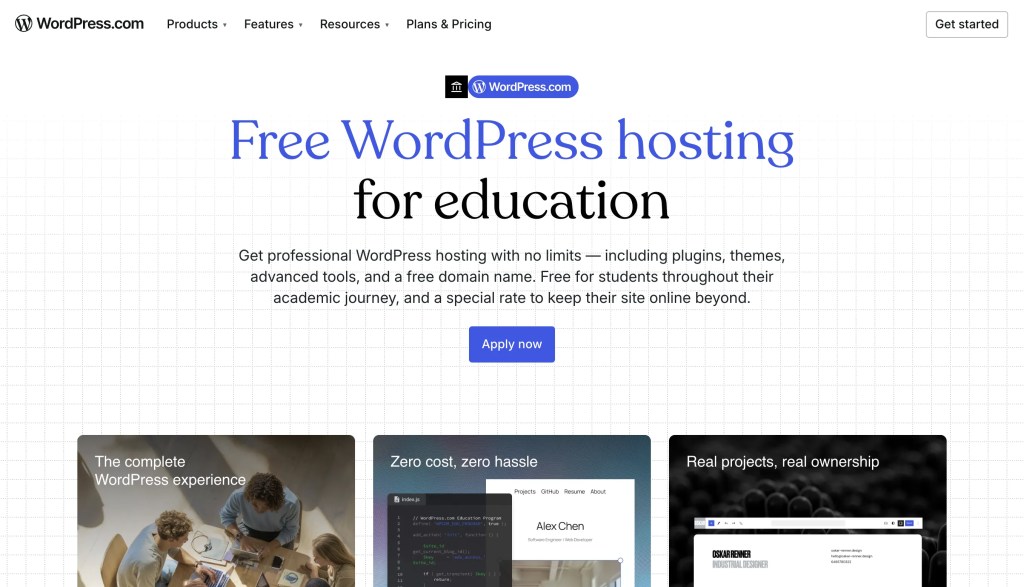
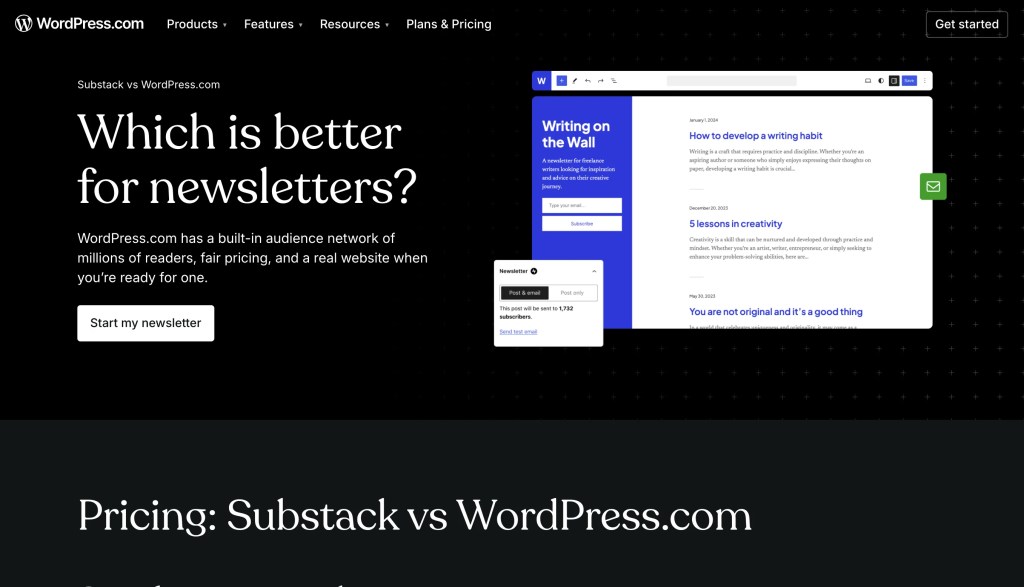
Landing pages
My team is sometimes responsible for the implementation of these. I didn’t like this type of front-end work and avoided it. A few months ago, we were in a situation in which the demand for new landing pages was high, and the resources for implementing them low, so I was “shoot, if I have to make these, let’s at least offload as much possible to AI”. The first round resulted into something like a vibe-coding flow, the benefit of which was that the work moved from the WordPress editor to Claude Code. But it was still too technical, and required a design (usually in the shape of a Figma document).
My colleague Jordan Hiller came up with the idea to give sense to Claude Code by providing it with a library of pre-designed, ready to use, empty sections that can be filled with text and images, depending on the needs. The technology behind it is Gutenberg Block Patterns. They’ve been around for awhile and can also be used from the editor or the wp cli. However, we expect the usage through a Claude skill to be the primary way to use this work because it doesn’t require expertise when making more advanced tweaks.
It’s an internal tool project. Something to make our lives easier, replace an annoying process with a faster one. The faster process lets you maintain the pages better, update more frequently, apply best practices sooner. Essentially, do more and stay on top of the change requests or avoid them altogether by letting the person who requests the change do it on their own.
Is that going to result into anything you’ll notice? Probably not. But if we’ve done our job well, the new landing pages will be built and updated faster, will load faster, and the colleagues who come up with the content will take the control from engineering.

 Veselin.blog
Great to hear.
LikeLiked by 1 person
Thanks. That’s something I don’t usually blog about but well, here we are 🙂
There will be a new logged-out homepage soon, built with the tool. Maybe that would be possible to notice 😀
LikeLiked by 1 person
The Daily Prompt like today is not to my liking. It’s wide open and how can I start to share my thughts. However, I saw many people did answer.
LikeLiked by 1 person
Thanks for the feedback.
LikeLiked by 1 person
Good team work is the key of progress. Well shared
LikeLiked by 1 person
Wonderful work, Veselin. I have seen firsthand people’s enjoyment of the new prompts, it’s not something I do but they were really getting tired of the recycled ones and you came up with some good new stuff. The awards that are coming out have also got people excited, so kudos to whoever thought of that. I feel very privileged to know and be able to communicate with you. It makes me feel like we’re all on to something good here. Keep up the incredible work.
LikeLiked by 2 people
Thank you! I started writing down ideas for 2027/2028. Already have 15-ish.
LikeLiked by 1 person
I revisited Google AI Studio to build a landing page. I was impressed by its design capabilities, there are significant improvements compared to just a few months ago.
LikeLike